
Peacock Spikemoss
Selaginella uncinata
Description
Growing requirements
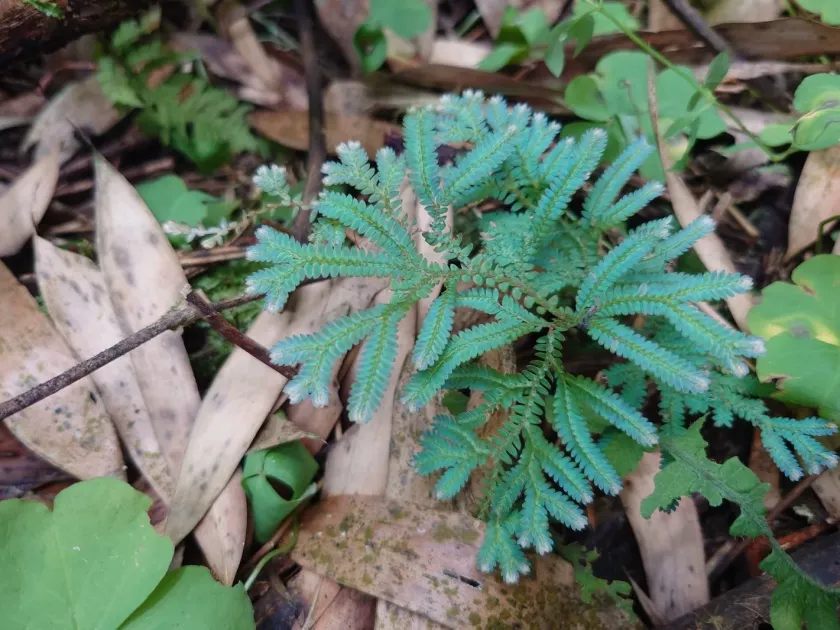
Peacock Spikemoss (Selaginella uncinata) is a perennial member of the Selaginellaceae family, native to the damp and shaded forest floors of China. It is highly valued for its iridescent blue-green foliage, which provides a unique aesthetic to indoor environments and greenhouses.
The plant grows as a low-creeping carpet, rooting easily at the nodes whenever the stems touch moist soil. This vigorous growth habit makes it an excellent choice for ground cover in terrariums or humid greenhouse landscapes.
Requirements for successful cultivation include consistently high humidity levels, ideally above 65%. It thrives in temperatures between +18°C and +24°C, requiring protection from cold drafts and direct heating sources that can desiccate the delicate leaves.
The preferred substrate for this culture is a well-draining, acidic, and organic-rich mix. A blend of peat moss, perlite, and pine bark ensures adequate moisture retention while preventing the saturation that leads to root asphyxiation.
Light levels should be kept low to moderate; shade-grown specimens exhibit the most intense blue-green coloration. Exposure to harsh sunlight must be strictly avoided, as it will cause the leaves to bleach and lose their characteristic metallic luster.
Main diseases and pests
Spider mites are the most significant pest for this species, especially in environments where humidity drops below recommended levels. They cause fine webbing and yellowing of the foliage, eventually leading to plant decline if not controlled.
Mealybugs can also infest the dense growth, hiding in the junctions of the stems. Early detection and mechanical removal combined with appropriate horticultural oils are effective management strategies for this pest.
Root rot is the most common physiological challenge, usually caused by overwatering or poorly aerated soil. Maintaining a balance between moisture and drainage is critical to the longevity of the Peacock Spikemoss in an agricultural or ornamental setting.
Fungal leaf spot diseases may appear if the foliage remains wet for extended periods in environments with poor air circulation. Improving airflow is essential to prevent these infections from spreading throughout the collection.
Nutrient deficiencies or improper soil pH can manifest as stunted growth or chlorosis. Periodic application of a dilute, balanced liquid fertilizer ensures the plant maintains the necessary vigor to resist secondary infections.