
Selaginella martensii
Selaginella martensii
Description
Growing requirements
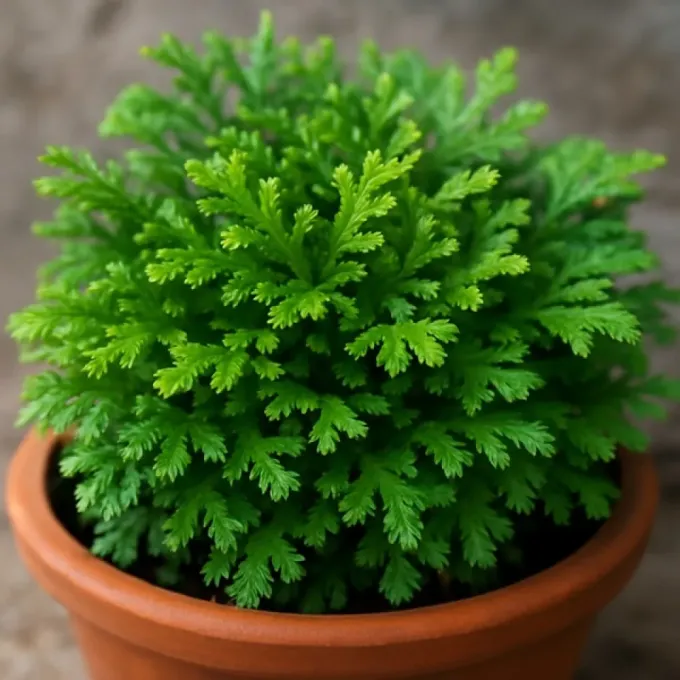
Selaginella martensii is a perennial herbaceous plant belonging to the Selaginellaceae family. Originally native to the humid tropical forests of Mexico and Central America, it is highly valued for its dense, fern-like appearance in ornamental plant production.
This species thrives in high humidity environments, ideally ranging between 75% and 85%. In commercial cultivation, it is often housed in controlled environments like greenhouses or terrariums where moisture levels can be strictly regulated throughout the entire vegetative cycle.
The optimal temperature range is between +18°C and +24°C. Selaginella martensii is highly sensitive to cold drafts and rapid temperature fluctuations, which can trigger stress responses and significant tissue damage, hindering the plant's growth potential.
A well-draining, acidic to neutral soil mixture is required for success. A standard professional substrate often consists of peat moss, perlite, and leaf mold, ensuring that the roots remain moist without sitting in stagnant water, which is a major risk factor.
Light requirements are strict: the plants require partial shade or bright, indirect light. Excessive sunlight exposure causes the delicate foliage to bleach or scorch, leading to economic losses due to the loss of aesthetic value required for the market.
Main diseases and pests
Root rot, primarily caused by fungal pathogens (such as Pythium or Phytophthora), is the most significant threat to the crop. It is typically associated with poor drainage and excessive watering, necessitating a precise irrigation management plan.
Spider mites represent the primary pest challenge, especially in lower-humidity conditions. These mites can quickly colonize dense growth, causing webbing and discoloration that ruins the plant's health and appearance within a very short timeframe.
Mealybugs and scale insects may also infest the stems, requiring systemic control methods. Because Selaginella is sensitive to harsh chemical treatments, integrated pest management (IPM) using biological controls is often preferred in modern greenhouse operations.
Sanitation is paramount in controlling threats. Removing dead foliage immediately is essential to prevent the spread of mold and bacteria within the dense canopy, which is a common site for secondary infection development.
Proactive monitoring of environmental conditions is the most effective defense strategy. By keeping humidity stable and ensuring adequate airflow without creating chilling drafts, growers can minimize the need for chemical interventions.