

Биоорганическое нано удобрение "НАГРО" / "NAGRO"
LLC NPO "BIOPLAN"
Fertilizers
43
25
·
11.2K
1 offer
365.08 €per pack
Buy
The Amaryllidaceae family comprises a diverse group of monocotyledonous plants known for their impressive flowering displays and specialized bulbous storage organs. As an agricultural commodity, they are primarily cultivated for the commercial cut-flower market and the nursery industry.
 Waldstein onion
Allium waldsteinii
Waldstein onion
Allium waldsteinii
 Wallich's onion
Allium wallichii
Wallich's onion
Allium wallichii
 Water onion
Crinum calamistratum
Water onion
Crinum calamistratum
 White onion
Allium denudatum
White-flowered onion
Allium albiflorum
White-tunic onion
Allium albotunicatum
White onion
Allium denudatum
White-flowered onion
Allium albiflorum
White-tunic onion
Allium albotunicatum
 Wild onion
Allium mutabile
Wild onion
Allium mutabile
 Woronow's snowdrop
Galanthus woronowii
Woronow's snowdrop
Galanthus woronowii
 Yellow onion
Allium flavum
Yellow onion
Allium flavum
 Zephyranthes
Zephyranthes
Zephyranthes
 Zephyranthes advena
Zephyranthes advena
Zephyranthes advena
 Zephyranthes andersonii
Zephyranthes andersonii
Zephyranthes andersonii
 Zephyranthes atamasco
Zephyranthes atamasco
Zephyranthes atamasco
 Zephyranthes bifida
Zephyranthes bifida
Zephyranthes bifida
 Zephyranthes bifolia
Zephyranthes bifolia
Zephyranthes bifolia
 Zephyranthes candida
Zephyranthes candida
Zephyranthes candida
 Zephyranthes carinata
Zephyranthes carinata
Zephyranthes carinata
 Zephyranthes chlorosolen
Zephyranthes chlorosolen
Zephyranthes chlorosolen
 Zephyranthes citrina
Zephyranthes citrina
Zephyranthes citrina
 Zephyranthes drummondii
Zephyranthes drummondii
Zephyranthes drummondii
 Zephyranthes eggersiana
Zephyranthes eggersiana
Zephyranthes eggersiana
 Zephyranthes gracilifolia
Zephyranthes gracilifolia
Zephyranthes gracilifolia
 Zephyranthes gracilis
Zephyranthes gracilis
Zephyranthes gracilis
 Zephyranthes hybrids
Zephyranthes hybrids
Zephyranthes hybrids
 Zephyranthes insularum
Zephyranthes insularum
Zephyranthes insularum
 Zephyranthes jonesii
Zephyranthes jonesii
Zephyranthes jonesii
 Zephyranthes pulchella
Zephyranthes pulchella
Zephyranthes pulchella
 Zephyranthes refugiensis
Zephyranthes refugiensis
Zephyranthes refugiensis
 Zephyranthes simpsonii
Zephyranthes simpsonii
Zephyranthes simpsonii
 Zephyranthes smallii
Zephyranthes smallii
Zephyranthes smallii
 Zephyranthes tsouii
Zephyranthes tsouii
Zephyranthes tsouii


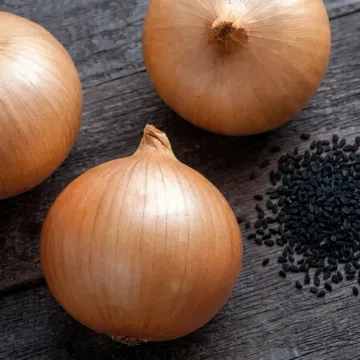

Originating mainly from tropical and subtropical regions of Africa and the Americas, these plants have adapted to distinct seasonal cycles. They thrive in environments where wet growing seasons are followed by distinct dry periods, a factor that must be mimicked in commercial production systems.
Botanically, they are defined by their perennial bulbs, linear leaves, and prominent umbel-like inflorescences. The physiological structure allows for rapid growth once conditions are favorable, utilizing stored starch reserves within the succulent scales of the bulb to fuel early-stage development.
Agricultural requirements necessitate well-drained, porous soils to prevent root asphyxiation. In professional settings, climate control is critical; maintaining specific day and night temperature differentials is essential for inducing dormancy and subsequent floral initiation. Irrigation management remains the most sensitive aspect of their daily care.
Commercial production faces constant pressure from pathogens such as Botrytis and Stagonospora, which can devastate bulb stocks. Effective management relies on a combination of quarantine practices for new stock, systematic application of systemic fungicides, and biological control agents to manage populations of aphids and bulb mites.