
Zephyranthes eggersiana
Zephyranthes eggersiana
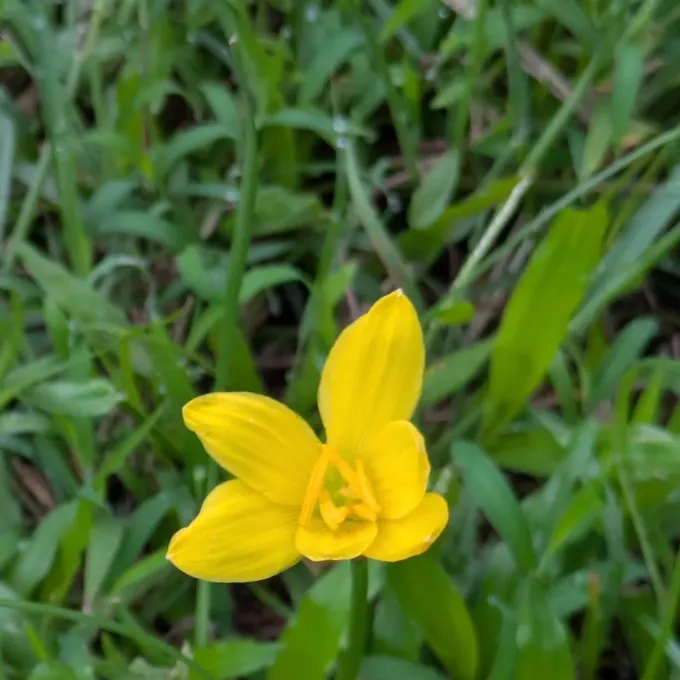
Description
Sowing dates
Zephyranthes eggersiana is a bulbous perennial belonging to the Amaryllidaceae family. In horticultural practice, this species is primarily propagated by dividing and replanting offsets produced by the parent bulb during the dormant phase.
Planting in the garden should occur in late spring after the frost threat has passed and the soil has warmed sufficiently. The bulbs should be placed at a depth where the neck remains at or slightly above the soil line.
Seed propagation is also possible but requires specialized conditions, including a consistent temperature of around 22 degrees Celsius and high humidity levels to facilitate germination in a light, sandy medium.
Adequate space is required for healthy bulb development. When planting, it is recommended to maintain a distance of at least 10–12 cm between individual bulbs to avoid competition for nutrients and moisture.
Quality control of the bulbs before planting is essential. Any bulb showing signs of rot, softening, or mechanical damage should be discarded to prevent the spread of pathogens in the planting area.
Growing requirements
Native to tropical habitats, Zephyranthes eggersiana requires high levels of light. To ensure proper growth and vibrant flowering, it should be situated in full sun or bright, filtered lighting throughout the growing season.
The soil structure must be porous and well-drained. A mixture of loam, sand, and organic matter is ideal, as it prevents water accumulation that can easily lead to the decay of the root system and the base of the bulb.
The optimal temperature for growth ranges between 20 and 25 degrees Celsius. During the dormant period, the plant thrives in cooler conditions, provided the temperature remains above freezing, allowing the bulb to recover.
Irrigation should be managed cautiously. While the plant requires moisture during its growth cycle, excessive water leads to root failure. Allow the soil to dry out significantly between watering sessions to mimic the plant's natural wet-dry cycles.
Nutrient supplementation with balanced liquid fertilizers during the active growth period supports the development of robust foliage and enhances the frequency of blooms throughout the season.
Main diseases and pests
The most common health issues for Zephyranthes eggersiana are related to fungal infections, such as red blotch or various forms of bulb rot, which are often exacerbated by poor drainage and high soil moisture.
Pests such as spider mites and bulb mites are significant threats. These pests often congregate on the underside of leaves or within the bulb scales, causing damage that manifests as yellowing or wilting of the foliage.
Integrated pest management should be employed, utilizing systemic fungicides for fungal issues and targeted acaricides for mite control. Maintaining hygiene in the growing environment is the primary preventative step.
Regular inspection of the foliage for signs of chlorosis or physical damage helps in the early detection of infestations. Quick action is necessary to prevent the pests from migrating to neighboring bulbs.
- Monitor soil moisture levels daily.
- Ensure adequate ventilation in the growing area.
- Remove and destroy severely infested or rotting material.