
Water onion
Crinum calamistratum
Description
Growing requirements
Crinum calamistratum, commonly known as the water onion, is a specialized bulbous plant belonging to the Amaryllidaceae family. Originating from the river systems of West Africa, it is a highly prized species for both aesthetic and botanical purposes in aquatic environments.
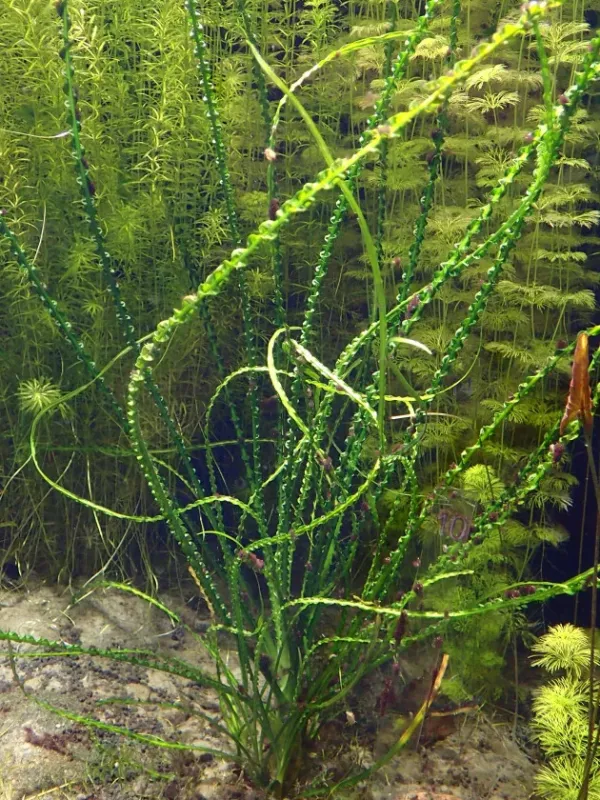
The plant features distinct narrow, dark green, ruffled leaves that can grow quite long, creating a sophisticated visual texture. Its growth habit relies on a healthy bulb that stores energy, which must be planted carefully to avoid burial of the neck, preventing rot.
Successful cultivation requires a nutrient-rich substrate combined with consistent water flow. The species thrives in tropical temperatures and prefers stable water parameters to maintain its intricate leaf structure and vibrant coloration throughout the growing season.
Agronomic management focuses on preventing mechanical damage to the bulb during placement. Supplemental fertilization is generally beneficial, particularly providing iron and other essential minerals to support the continuous development of the long, elegant foliage.
The primary commercial use of this crop is in the aquatic plant industry and aquarium landscaping. It serves as a flagship species for depth-creating displays, offering a unique architectural form that few other submerged plants can provide.
Main diseases and pests
Major threats to the crop include soft rot caused by improper planting depth or anaerobic substrate conditions. Furthermore, the foliage is susceptible to grazing by specialized aquatic herbivores, which can significantly reduce the vitality of the bulb.