
Zephyranthes advena
Zephyranthes advena
Description
Growing requirements
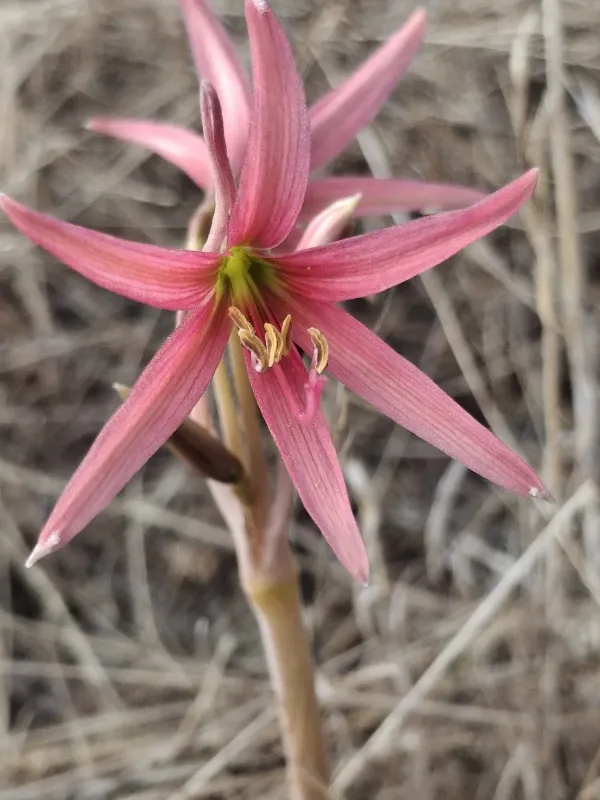
Zephyranthes advena is an elegant bulbous plant belonging to the Amaryllidaceae family. It is native to South America, particularly regions of Chile, where it thrives in temperate to warm climatic conditions.
The plant features small, ovoid bulbs and slender, grass-like leaves that emerge in clusters. Its main attraction is the vibrant flower, usually appearing on a slender stalk, which is highly appreciated in decorative horticulture.
This species requires a bright location with filtered light to ensure proper foliage growth and subsequent blooming. Exposing the plant to direct, harsh midday sun should be avoided to prevent leaf scorching.
The soil for Zephyranthes advena must be well-draining and slightly acidic to neutral in pH. A mixture consisting of potting soil, perlite, and coarse sand is recommended to maintain the necessary aeration for the bulb health.
Watering should be balanced according to the growth cycle. During the active growing season, keep the soil moist, but reduce watering significantly during the dormancy phase to allow the bulb to recover and prepare for the next cycle.
Main diseases and pests
Root rot is the most common issue for Zephyranthes advena, usually caused by overwatering or poor drainage. Once the bulb begins to rot, it is difficult to restore, making prevention the best strategy.
Pests such as spider mites and scale insects are known to infest the plant, especially in low-humidity environments. These pests can cause yellowing of the leaves and stunted growth if left unmanaged.
Regular inspection of the plant is vital to detect the presence of pests early. Using a damp cloth to wipe the leaves or applying horticultural soap is often sufficient for small infestations on the foliage.
To avoid fungal infections, ensure that the pot has adequate drainage holes and avoid leaving the plant in a tray filled with standing water. Good air circulation around the plant also significantly reduces the risk of disease.
In case of severe infestations or persistent rot, it is advised to remove the plant from the pot, inspect the bulb, prune damaged tissues, and repot it in fresh, sterile soil to restore the plant's health.