
Woronow's snowdrop
Galanthus woronowii
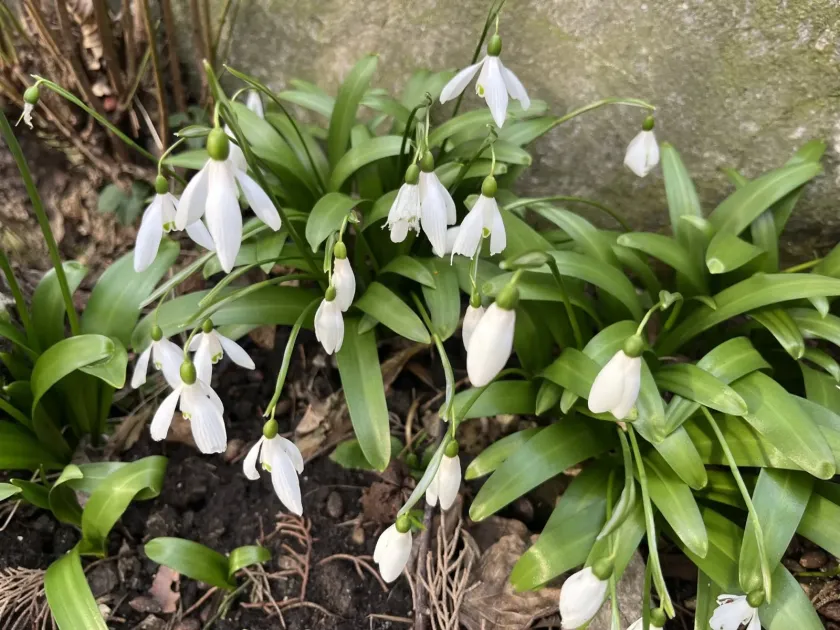
Description
Growing requirements
Woronow's snowdrop (Galanthus woronowii) is a perennial bulbous plant belonging to the Amaryllidaceae family. It is native to the Caucasus region, primarily found in deciduous forest zones.
The plant features glossy, broad green leaves and typically blooms in late winter or early spring. It is a classic ephemeroid that completes its vegetative cycle before the canopy of trees fully develops.
Soil requirements involve well-drained, humus-rich loamy soil. The plant thrives in environments that mimic its natural habitat, requiring moderate moisture levels during the active growth phase.
Light exposure should be carefully managed; partial shade is ideal. While they can tolerate full sun in early spring, they require shading from harsh summer sun to prevent the bulbs from drying out.
Agronomic management includes maintaining soil fertility through organic matter application. Phosphorus and potassium are essential for proper bulb development, ensuring strong blooms in the following season.
Main diseases and pests
The primary fungal threat to the species is Botrytis blight, which manifests as grey mold on the leaves and flowers, especially during cool, damp spring weather.
Basal rot caused by soil-borne fungi is another critical issue, often triggered by waterlogged conditions that lead to the rapid decay of the bulb's root plate.
Pests such as bulb mites are particularly dangerous as they feed on the inner scales of the bulb, causing it to weaken and eventually succumb to secondary bacterial infections.
The Large Narcissus Fly (Merodon equestris) is a major threat, as its larvae burrow into the bulbs, leaving them hollowed out and unable to sustain further growth.
Integrated pest management, including crop rotation and the use of healthy, treated planting material, is essential for maintaining the productivity of the cultivation area.