

Description
Symptoms
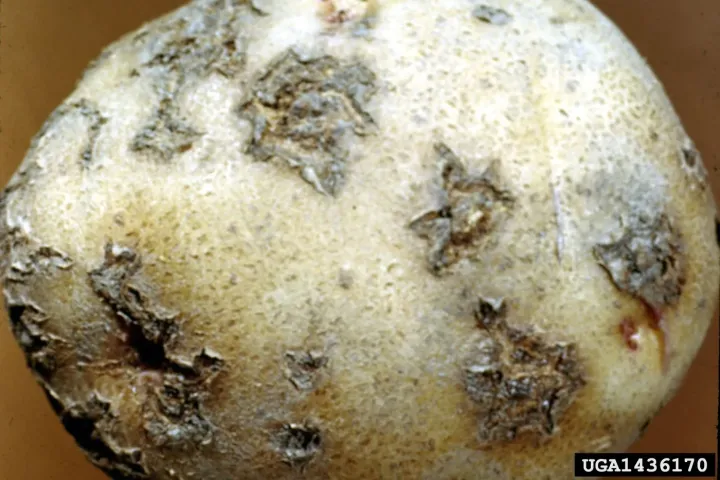
The most recognizable symptom is the appearance of corky lesions on the potato tuber skin. These lesions can manifest in different forms: superficial, raised, or deep-pitted, depending on the severity of the attack.
Initially, small, light-brown spots appear, which gradually expand and darken. As the tuber grows, these areas become crusty and rough, giving the surface a distinctively scarred appearance.
In addition to tubers, the pathogen can infect stolons and roots. This underground damage can weaken the root system, potentially reducing the plant's overall ability to absorb nutrients and water.
Deep-pitted lesions can reach a depth of up to several millimeters, creating openings that facilitate the entry of secondary pathogens, such as soft rot bacteria or various fungi.
Visual inspection at harvest time typically reveals these scabby, unsightly patches on the skin, which significantly depreciate the market value of the produce.
Pathogen
Common scab is caused by soil-borne bacteria known as Streptomyces scabies. These organisms belong to the Actinomycetaceae family and are characterized by their ability to live as saprophytes on organic matter in the soil.
The pathogen produces a phytotoxin called thaxtomin, which is responsible for the characteristic lesions on the surface of tubers. It primarily infects the plant through young tissues such as lenticels or small wounds on the skin of the developing tuber.
These bacteria are highly persistent and can survive in the soil for many years, even in the absence of a host crop. They are widely distributed in almost all agricultural regions where potato cultivation is practiced.
The infection is spread through contaminated soil particles, infected seed potatoes, and the movement of equipment. It is particularly adept at colonizing various organic substrates.
From a biological standpoint, the disease is a localized bacterial infection that triggers a response in the plant resulting in the formation of abnormal, corky tissues.
Conditions for development
The development of common scab is strongly linked to soil chemistry. It thrives in alkaline or neutral soils, particularly those with a pH level above 6.0.
Environmental conditions also play a critical role, as the disease is most active when the soil is warm and relatively dry. Temperatures ranging from +20°C to +30°C are optimal for the growth of the bacteria.
Lack of moisture during the period of tuber initiation and rapid expansion is a major risk factor. In dry soil conditions, the tuber's natural resistance is lowered, making it more susceptible to penetration.
The application of fresh manure or heavy lime treatments just before planting often exacerbates the problem by creating a favorable environment for the pathogen.
Poor soil structure, including lack of aeration and compaction, further contributes to the accumulation of the bacteria in the root zone.
Why it matters
The primary impact of common scab is the reduction in tuber quality. Scabby potatoes are often rejected by retailers and consumers due to their unappealing physical appearance.
The disease leads to significant waste during peeling and processing, as deep lesions require more extensive removal of tissue, which affects the culinary utility of the crop.
Infected tubers are more prone to storage issues. The damaged skin allows secondary organisms to infiltrate the tuber, leading to increased decay and spoilage during long-term storage.
For seed growers, the presence of common scab lowers the phytosanitary status of the field and can lead to reduced sprouting energy in subsequent planting seasons.
Economic losses arise not only from reduced yield quality but also from the added costs of remediation, including the need for long-term crop rotation and soil amendments.
Protection
Effective crop rotation is the most important strategy. Avoid planting potatoes in the same field for at least 4-5 years, utilizing cover crops like rye or mustard to improve soil health.
Managing soil pH is vital; maintaining a slightly acidic soil environment can suppress the bacteria. The use of physiologically acidic fertilizers, such as ammonium sulfate, can be beneficial.
Providing adequate irrigation during the first weeks of tuber formation is essential to keep soil moisture levels high, which significantly inhibits the infection process.
Choosing resistant cultivars is the most effective long-term solution. Many modern potato varieties have been bred to demonstrate high resistance to common scab even in infested soil.
Avoid fresh manure application and ensure that all planting equipment is cleaned to prevent the spread of the pathogen to new, uninfested fields.
Content graph
Connections · Common scab
Most often together:
Marketplace
Products · 257
All 257
Potato 211
Tulips 23
Insecticides, Acaricides 15
Sugar Beet 3
Fungicides 2
Sweet Pea 1
Kostretz 1
Lucerne 1


Fenomen
Private Joint-Stock Scientific and Production Company
Potato
0
0
·
91
3 offers
2.54 €per 1 kg
Buy


Zoryana
Chernihiv Elite Potato Research and Production Association
Potato
0
0
·
80
2 offers
2.39 €per 1 kg
Buy


Panyanka
Chernihiv Elite Potato Research and Production Association
Potato
0
0
·
73
4 offers
0.78 €per 1 kg
Buy


Azhur
Private Joint-Stock Scientific and Production Company
Potato
0
0
·
68
4 offers
2.15 €per 1 kg
Buy





Community
Discussion
No discussions yet — be the first.