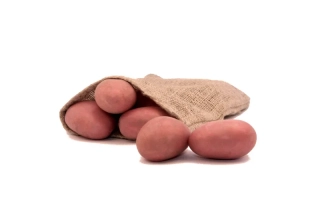
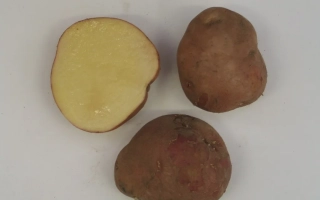
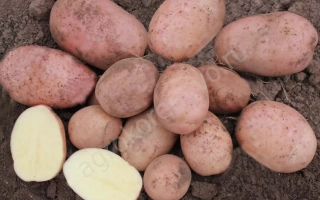
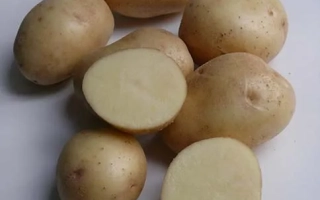
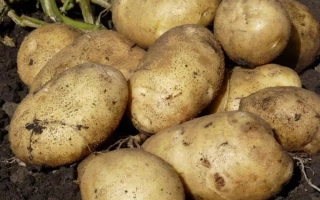
The potato variety Zlatka is a medium-maturing table variety with a maturity period of 80 to 95 days. The plant is tall, semi-erect, with medium-sized green leaves and a flower bud without or with very weak anthocyanin coloring. Tubers are round, with yellow skin and light-yellow flesh, weighing from 109 to 160 grams. Starch content varies within 15.7–18.0%, ensuring excellent taste qualities highly appreciated by consumers. The potato is suitable for various cooking methods, including boiling, baking, frying, and making mashed potatoes.
The yield of the Zlatka variety is high and stable, reaching 162 to 406 centners per hectare, with maximum yields up to 456 centners. The number of tubers per plant ranges from 5 to 10. The tuber marketability is within 80–98%, and storability reaches 94%, indicating good product preservation during storage. The variety is characterized by plasticity and multi-tuber formation, which contributes to its adaptability to various growing conditions.
Zlatka possesses comprehensive resistance to a range of diseases. It is resistant to potato cyst nematode, leaf curl virus, and mosaic virus. According to phytopathology data, the variety is moderately susceptible to late blight on foliage and moderately resistant on tubers, as well as relatively resistant to common scab and rhizoctonia. Nevertheless, the variety is susceptible to golden potato cyst nematode. Tubers maintain 94–98% survival during winter storage, making Zlatka a reliable choice for long-term storage and marketing.