

Reference · Crops
Grape
Vitis L.
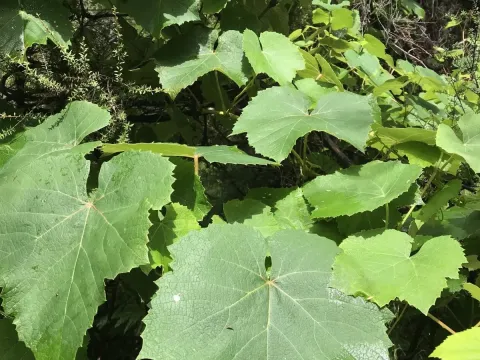
Grape (Vitis L.) is a woody vine species belonging to the Vitaceae family, known for its significant role in global agriculture and food production.
35
items
What the section contains
 Grapevine
Vitis vinifera L.
1 130 products
Grapevine
Vitis vinifera L.
1 130 products
 Arizona grape
Vitis arizonica Engelm.
Arizona grape
Vitis arizonica Engelm.
 Bailey grape
Vitis cinerea (Engelm.) Millardet var. baileyana (Munson) Comeaux
Bailey grape
Vitis cinerea (Engelm.) Millardet var. baileyana (Munson) Comeaux
 Birch-leaf grape
Vitis betulifolia Diels & Gilg
Birch-leaf grape
Vitis betulifolia Diels & Gilg
 Champin Grape
Vitis x champinii Planch.
Champin Grape
Vitis x champinii Planch.
 Champinii-Instabilis grape
Vitis x champinii Planch. x Vitis x instabilis Ardenghi et al.
Common grape vine
Vitis vinifera L. subsp. vinifera
Champinii-Instabilis grape
Vitis x champinii Planch. x Vitis x instabilis Ardenghi et al.
Common grape vine
Vitis vinifera L. subsp. vinifera
 Fox grape
Vitis labrusca L.
Fox grape
Vitis labrusca L.
 Fox grape
Vitis vulpina L.
Goliath Grape
Vitis x goliath
Graybark grape
Vitis cinerea (Engelm.) Engelm. ex Millardet
Fox grape
Vitis vulpina L.
Goliath Grape
Vitis x goliath
Graybark grape
Vitis cinerea (Engelm.) Engelm. ex Millardet
 Graybark grape
Vitis cinerea (Engelm.) Engelm. ex Millardet var. helleri (L. H. Bailey) M. O. Moore
Hybrids of Vitis champinii and Vitis riparia
Hybrids between Vitis x champinii Planch. and Vitis riparia Michx.
Graybark grape
Vitis cinerea (Engelm.) Engelm. ex Millardet var. helleri (L. H. Bailey) M. O. Moore
Hybrids of Vitis champinii and Vitis riparia
Hybrids between Vitis x champinii Planch. and Vitis riparia Michx.
 Hybrids of Vitis riparia and Vitis vinifera
hybrids between Vitis riparia and Vitis vinifera
Hybrids of Vitis riparia and Vitis vinifera
hybrids between Vitis riparia and Vitis vinifera
 Intergeneric hybrids of Vitis rotundifolia and Vitis vinifera
hybrids between Vitis rotundifolia Michx. and Vitis vinifera L.
Intergeneric hybrids of Vitis rotundifolia and Vitis vinifera
hybrids between Vitis rotundifolia Michx. and Vitis vinifera L.
 Interspecific grape hybrids
Hybrids between Vitis vinifera and Vitis labrusca
Interspecific grape hybrids
Hybrids between Vitis vinifera and Vitis labrusca
 Maple-leaf grape
Vitis acerifolia Raf.
Maple-leaf grape
Vitis acerifolia Raf.
 Mountain grape
Vitis monticola Buckley
Mountain grape
Vitis monticola Buckley
 Munson grape
Vitis rotundifolia Michx. var. munsoniana (J. H. Simpson ex Planch.) M. O. Moore
Muscadine grape
Vitis rotundifolia Michx.
Muscadine grape
Vitis rotundifolia Michx. var. rotundifolia
Munson grape
Vitis rotundifolia Michx. var. munsoniana (J. H. Simpson ex Planch.) M. O. Moore
Muscadine grape
Vitis rotundifolia Michx.
Muscadine grape
Vitis rotundifolia Michx. var. rotundifolia
 Muscadine-European grape hybrids
hybrids between Vitis rotundifolia Michx. var. rotundifolia and Vitis vinifera L. subsp. vinifera
New England grape
Vitis x novae-angliae Fernald
Muscadine-European grape hybrids
hybrids between Vitis rotundifolia Michx. var. rotundifolia and Vitis vinifera L. subsp. vinifera
New England grape
Vitis x novae-angliae Fernald
 Riparia Gloire de Montpellier
Vitis riparia Michx.x Vitis rupestris Scheele
Riparia x Rupestris x Cinerea Grapevine
Vitis riparia Michx. x Vitis rupestris Scheele x Vitis cinerea Engelm.
Riverbank grape
Vitis riparia Michx.
Riverbank grape hybrid
Vitis riparia Michx. x Vitis cinerea Engelm.
Riparia Gloire de Montpellier
Vitis riparia Michx.x Vitis rupestris Scheele
Riparia x Rupestris x Cinerea Grapevine
Vitis riparia Michx. x Vitis rupestris Scheele x Vitis cinerea Engelm.
Riverbank grape
Vitis riparia Michx.
Riverbank grape hybrid
Vitis riparia Michx. x Vitis cinerea Engelm.
 Sand grape
Vitis rupestris Scheele
Sand grape
Vitis rupestris Scheele
 Summer grape
Vitis aestivalis Michx.
Summer grape
Vitis aestivalis Michx.
 Vitis berlandieri x Vitis riparia
Vitis berlandieri Planch. x Vitis riparia Michx.
Vitis berlandieri x Vitis riparia
Vitis berlandieri Planch. x Vitis riparia Michx.
 Vitis berlandieri x Vitis riparia x Vitis cinerea
Vitis berlandieri Planch. x Vitis riparia Michx. x Vitis cinerea Engelm.
Vitis berlandieri x Vitis rupestris
Vitis berlandieri Planch x Vitis rupestris Scheele
Vitis berlandieri x Vitis riparia x Vitis cinerea
Vitis berlandieri Planch. x Vitis riparia Michx. x Vitis cinerea Engelm.
Vitis berlandieri x Vitis rupestris
Vitis berlandieri Planch x Vitis rupestris Scheele
 Vitis riparia x Vitis berlandieri x Vitis rupestris
Vitis riparia Michx. x Vitis berlandieri Planch. x Vitis rupestris Scheele
Vitis riparia x Vitis berlandieri x Vitis rupestris
Vitis riparia Michx. x Vitis berlandieri Planch. x Vitis rupestris Scheele
 Vitis rotundifolia x Vitis rupestris hybrid
Vitis rotundifolia x Vitis rupestris
Vitis solonis x Vitis riparia
Vitis solonis hort. Berol. ex Planch. x Vitis riparia Michx.
Vitis rotundifolia x Vitis rupestris hybrid
Vitis rotundifolia x Vitis rupestris
Vitis solonis x Vitis riparia
Vitis solonis hort. Berol. ex Planch. x Vitis riparia Michx.
Marketplace
Products in this section · 12


Биоорганическое нано удобрение "НАГРО" / "NAGRO"
LLC NPO "BIOPLAN"
Fertilizers
43
25
1 offer
37.63 €за л
Buy


Grape
The plant requires high levels of solar radiation to facilitate photosynthesis, which is essential for sugar accumulation and overall fruit quality development.
It thrives in well-drained soils with adequate aeration, ranging from sandy loams to rocky slopes, provided the water table does not impede root growth.
Climate is a limiting factor; most Vitis species prefer regions with distinct seasonal changes, warm summers for ripening, and manageable winters.
Economic uses include winemaking, fresh market consumption, raisin production, and the manufacturing of various juices, jellies, and dietary supplements.
Vineyard productivity is heavily dependent on the training system, vine density, and precise canopy management performed throughout the growing season.
Standardized pruning techniques are vital for balancing vegetative growth with fruit production, ensuring that the plant is not overcropped.
Effective irrigation management, particularly during the critical flowering and berry set stages, is paramount for securing high and consistent yields.
Nutrient management involves balanced application of nitrogen, phosphorus, and potassium, which are tailored according to soil analysis and vine growth stage.
Proper trellising systems allow for better light penetration, improved airflow, and easier access for maintenance equipment, directly contributing to higher output.
The most common fungal diseases affecting vineyards globally are downy mildew (Plasmopara viticola) and powdery mildew (Erysiphe necator).
Grey mold (Botrytis cinerea) can cause significant losses, especially in humid regions, necessitating canopy thinning to promote natural drying.
Major insect pests include grape berry moths, mealybugs, and spider mites, which can damage fruit quality and introduce secondary infections to the vines.
Integrated Pest Management (IPM) practices focus on preventative strategies, including the use of resistant rootstocks and monitoring of pest populations.
- Regular monitoring of disease pressure.
- Application of specialized fungicidal and insecticidal treatments.
- Sanitation practices, such as removing infected vines and plant debris.
Harvesting is performed based on maturity parameters, which are specific to the intended use of the grapes, whether for wine, table consumption, or raisins.
Sugar levels (Brix), pH balance, and total titratable acidity are the key indicators used by professionals to determine the optimal harvest timing.
Manual harvesting is often preferred for high-quality wine production to ensure only the healthiest clusters are selected and handled with care.
Machine harvesting is widely used for larger commercial vineyards, offering efficiency and speed, which is crucial for processing large volumes of fruit.
Post-harvest management, including rapid cooling and proper storage conditions, is essential to prevent degradation and maintain high market value.