
Muscadine grape
Vitis rotundifolia Michx. var. rotundifolia
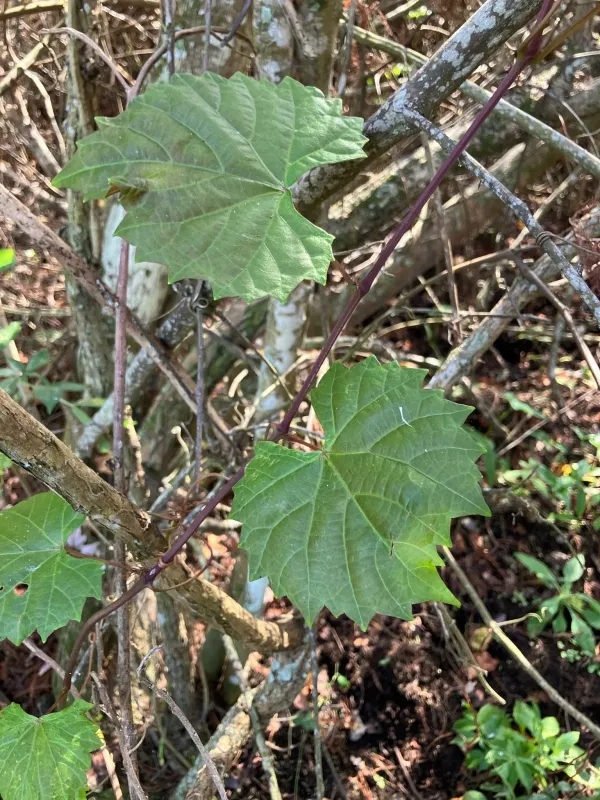
Description
Growing requirements
Muscadine grape (Vitis rotundifolia) is a distinct species within the Vitaceae family, native to the Southeastern United States. It is highly valued for its natural resistance to many pests and diseases that affect conventional grapevines.
The plant thrives in warm, humid climates and requires a long growing season to achieve full sugar maturity. It is generally not winter-hardy in regions where temperatures drop significantly below freezing for extended periods.
Soil requirements for muscadine include deep, well-draining textures with an acidic to neutral pH range. Proper preparation of the planting site, including organic amendment and drainage improvement, is crucial for long-term health.
Cultural practices involve training the vines on sturdy overhead arbors or single-wire trellis systems. Given its vigorous growth habit, annual winter pruning is essential to manage canopy density and encourage sunlight penetration.
The fruit is widely used for processing into wines, jellies, and preserves. Due to its thick skin and rich phytochemical profile, it is becoming an increasingly popular choice for fresh consumption in local markets.
Main diseases and pests
Black rot is considered one of the primary fungal threats to muscadine production, especially in areas with high humidity. It affects both vegetative parts and the developing fruit clusters.
Powdery mildew can impact vine vigor and fruit quality if air circulation within the canopy is inadequate. Proper spacing during the planting stage helps mitigate this risk significantly.
Insect pests, such as the grape root borer, can cause hidden damage to the root system, ultimately leading to a decline in plant vigor over several seasons if left untreated.
Bird damage is a major concern during the ripening phase. Producers often employ protective netting or visual scare devices to minimize harvest losses caused by avian pests.
Integrated pest management (IPM) strategies, including monitoring and sanitation, are recommended to maintain healthy vineyards and reduce reliance on synthetic chemical applications.
Harvesting
Harvesting muscadine grapes typically occurs in late summer or early autumn, depending on the specific cultivar characteristics and local temperature accumulation.
Because muscadine berries do not ripen simultaneously, multiple harvesting passes are often required to ensure that all fruit is picked at the peak of sweetness and flavor profile.
Manual harvesting is the standard practice, as the fruit is prone to abscission when fully ripe, making it delicate to handle compared to traditional grape bunches.
Quality control during harvest involves removing damaged or diseased berries to maintain the integrity of the total yield during subsequent storage or processing stages.
Post-harvest handling is critical for maintaining freshness. Immediate cooling of the harvested fruit prevents degradation and ensures a longer shelf life for fresh market distribution.