
Riverbank grape
Vitis riparia Michx.
Description
Growing requirements
The riverbank grape (Vitis riparia Michx.) is a member of the Vitaceae family. It is a vigorous, climbing woody vine native to North America, traditionally found growing along riverbanks, streams, and forest edges.
The species is renowned for its exceptional cold hardiness, surviving temperatures as low as -30°C. It is highly adaptable to various soil types, thriving in both moist, heavy soils and drier, sandy conditions, which makes it a versatile plant for various landscapes.
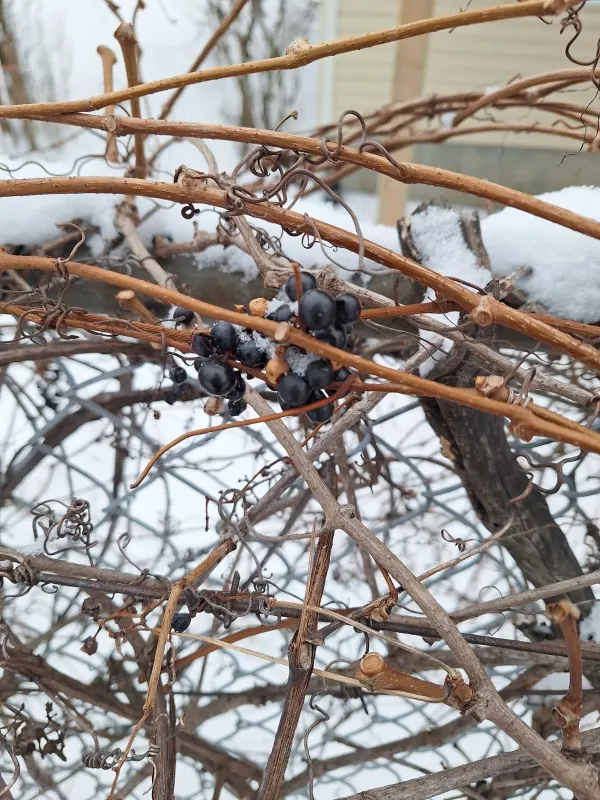
Botanically, it features large, heart-shaped leaves with distinct lobes and small, dark purple-to-black berries arranged in loose clusters. It is dioecious, meaning male and female flowers typically appear on separate vines, which is a key trait for propagation.
With an aggressive growth habit, the riverbank grape can climb to significant heights, using its strong tendrils to secure itself to supports. Its expansive root system makes it an excellent choice for stabilizing soil on steep slopes and riverbanks to prevent erosion.
In agriculture, its primary utility is as a rootstock for commercial grape varieties. Its natural resistance to phylloxera and extreme adaptability to diverse environmental conditions provide a robust foundation for grafting desirable Vitis vinifera cultivars.
Main diseases and pests
Vitis riparia is naturally resistant to downy mildew and powdery mildew, which are among the most destructive diseases in commercial vineyards worldwide, making it a vital resource for breeders.
Despite its resilience, the plant can be susceptible to anthracnose during periods of high humidity and prolonged rainfall, requiring basic preventive care.
Spider mites can occasionally infest the foliage during hot, dry summer months, potentially leading to leaf yellowing and reduced photosynthetic output if left unmanaged.
While the root system is highly resistant to soil-borne phylloxera, the foliage can sometimes host the leaf-galling form of the pest, which requires monitoring in nursery settings.
Proper canopy management and pruning are essential to maintain good airflow, which minimizes the microclimate favorable to fungal pathogen development.