
Mountain grape
Vitis monticola Buckley
Description
Growing requirements
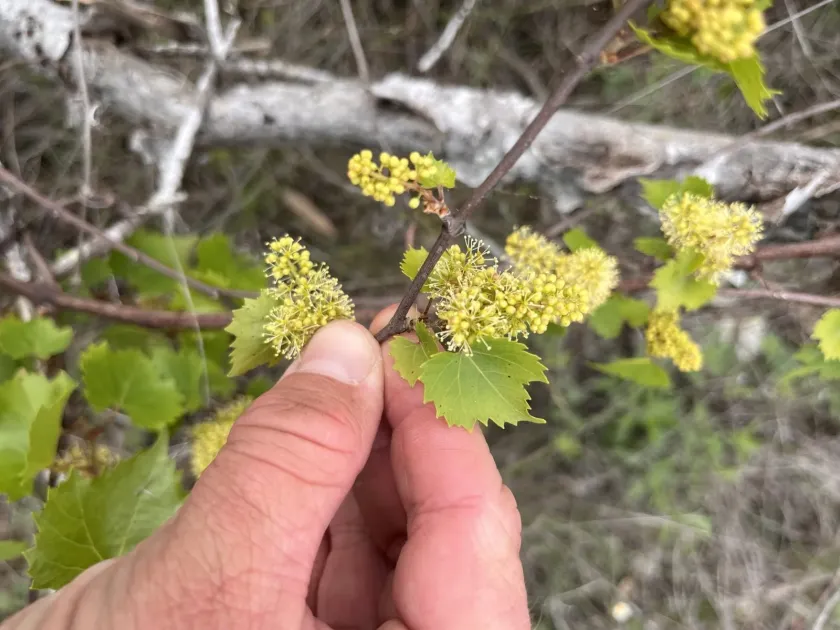
Vitis monticola, commonly known as mountain grape, is a species of wild grape belonging to the Vitaceae family. It is native to the Edwards Plateau region of Texas, where it naturally thrives on dry, limestone-rich soils and rocky slopes.
This species is highly regarded for its exceptional drought tolerance. Its root system is exceptionally vigorous, allowing the plant to penetrate through hard limestone layers to access moisture, making it an ideal candidate for challenging environments.
Botanically, it features small, refined leaves and thin, hardy canes. The plant is well-adapted to high-temperature fluctuations and intense sunlight, which are typical characteristics of its native geographical range in the southern United States.
When cultivating mountain grape, it is essential to mimic its natural habitat. This means planting in well-drained, alkaline soils and avoiding any locations prone to waterlogging, as the species is sensitive to poor soil aeration.
In modern viticulture, Vitis monticola is primarily used as a genetic resource for rootstock development. Its inherent resistance to lime-induced chlorosis makes it a valuable asset for breeding programmes aimed at creating rootstocks for calcareous vineyards.
Main diseases and pests
Like many species within the Vitis genus, mountain grape is susceptible to common vineyard pathogens such as downy mildew and powdery mildew. Careful monitoring is necessary to protect young plants in nursery settings.
Insect pests, including leafhoppers and spider mites, can cause significant stress to the foliage. Implementing integrated pest management (IPM) strategies is recommended to keep pest populations below the economic injury level.
One of the most important traits of Vitis monticola is its partial resistance to phylloxera. Because of this, it is frequently utilized in cross-breeding to incorporate resistance genes into new commercial grape rootstock varieties.
Cultural practices should focus on maintaining open canopy structures to promote air circulation. This effectively lowers the humidity levels around the canopy, reducing the likelihood of fungal infections spreading through the vineyard.
In cases where the species is being used for research or propagation, it is critical to ensure that all plant material is disease-free. Strict phytosanitary protocols prevent the introduction of regional viruses into the propagation blocks.