
Sand grape
Vitis rupestris Scheele
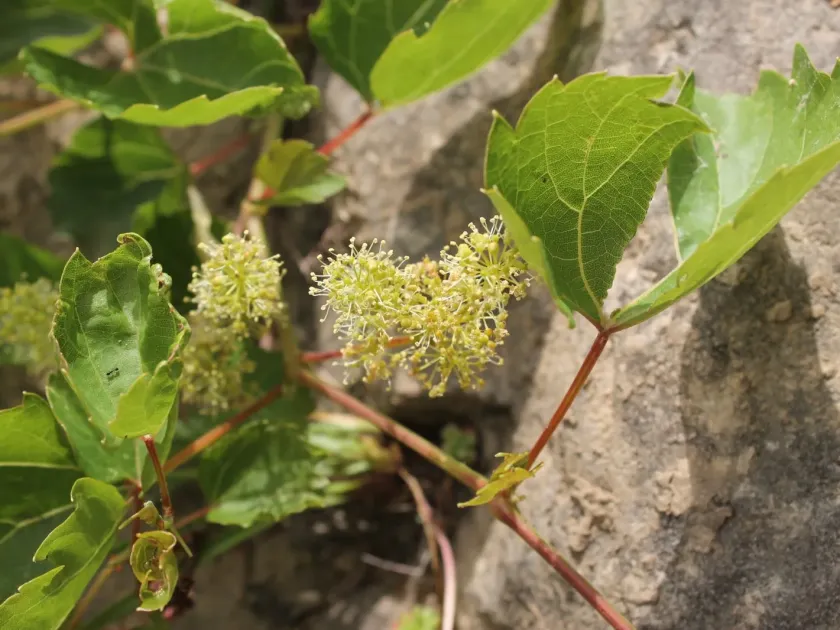
Description
Growing requirements
The Sand grape (Vitis rupestris Scheele), a member of the Vitaceae family, is a deciduous shrubby vine native to the southern and central United States. Unlike many other Vitis species, it typically grows in a bush-like habit, often found in rocky, well-drained habitats near watercourses.
Its botanical profile is marked by smooth, glossy, kidney-shaped leaves and a highly developed, deep-reaching root system. This morphology allows the plant to thrive in nutrient-poor and rocky environments where other grape species would struggle to survive.
The species is exceptionally drought-tolerant and requires substantial sunlight to reach its full physiological potential. It prefers soils with excellent drainage, such as sandy or gravelly soils, which mimic its natural cliffside and riverbank habitat.
In terms of cultivation, Vitis rupestris is rarely grown for fruit production due to its small, acidic berries. Instead, its primary agricultural value lies in its use as a hardy rootstock for commercial vineyards around the world.
Breeders rely on this species to impart essential traits, including high tolerance to calcareous soils and excellent compatibility with Vitis vinifera scions, which has made it a cornerstone of modern viticultural science.
Main diseases and pests
The most significant advantage of Vitis rupestris in agriculture is its strong natural resistance to the grape phylloxera aphid, which has historically devastated vineyards worldwide.
While robust, the plant is not entirely immune to common viticultural diseases such as downy mildew and powdery mildew. However, its susceptibility is generally low compared to domesticated European grape varieties.
Environmental stress, particularly waterlogging, poses the greatest threat to the health of the Sand grape. Being adapted to arid and rocky conditions, stagnant water in the root zone can trigger root rot and decline.
Pests like leafhoppers and various moth larvae may occasionally infest the foliage, though they rarely impact the long-term viability of established plants due to the species' vigorous growth.
Effective management includes maintaining proper spacing and ensuring excellent soil aeration, which prevents the moisture buildup necessary for fungal proliferation and helps the plant maintain its natural vigor.