
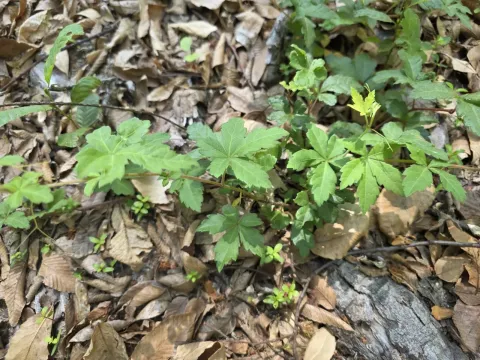
Clematicissus
Clematicissus
Clematicissus (Latin: Clematicissus) belongs to the Vitaceae family. This genus of perennial vines is native primarily to the tropical and subtropical regions of Australia. The plant is valued for its high decorative qualities and its ability to quickly form a dense green mass.
What the section contains

Clematicissus
For normal development, the crop requires well-lit areas with diffused light, as direct sunlight can cause leaf burns. The plant prefers moderately warm air temperatures in the range of 20–25 degrees Celsius during the growing season.
Soil requirements include the use of fertile, well-drained substrates with a neutral or slightly acidic reaction. It is important to avoid water stagnation in the root system, which can cause rotting, so a high-quality drainage layer is mandatory in container culture.
During the period of active growth, Clematicissus requires regular watering, however, in winter, the frequency should be reduced to a minimum. Fertilization is carried out with complex mineral fertilizers for decorative foliage plants once every two weeks from spring to the end of summer.
Propagation of the crop is mainly carried out by cuttings, which are done in the warm season with high air humidity. The plant requires a mandatory support, as its shoots have strong growth energy and need proper direction to form a canopy.
The main pests threatening Clematicissus are spider mites and mealybugs, which often attack the plant at low indoor air humidity. Regular inspection of the leaves and spraying them helps prevent mass infestation.
With waterlogging of the soil, the plant can be affected by root rot caused by pathogenic fungi. Treatment involves repotting with substrate replacement and removing affected root areas followed by fungicide treatment.
The leaves of the vine can turn yellow due to incorrect watering or a deficiency of micronutrients in the soil. Timely application of chelated forms of iron and magnesium helps to cope with chlorosis and restore the plant's healthy appearance.
Powdery mildew is another common problem that occurs due to poor air circulation in a greenhouse or room. For prevention, it is necessary to ensure the correct distance between plants and maintain an optimal humidity level.
As a protective measure, it is recommended to carry out preventive treatment with broad-spectrum insecto-acaricides at the beginning of the spring season. Compliance with agrotechnical standards is the best way to prevent diseases in this species.