
Arizona grape
Vitis arizonica Engelm.
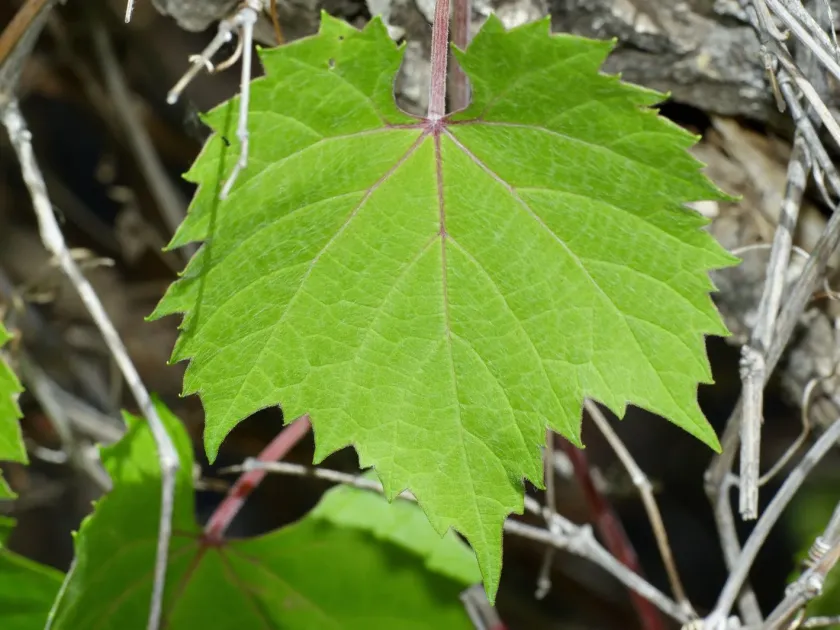
Description
Growing requirements
Arizona grape (Vitis arizonica Engelm.) belongs to the Vitaceae family. This woody vine is native to the arid regions of the southwestern United States and northern Mexico, where it thrives in rugged, desert-like environments.
The species is renowned for its remarkable adaptation to heat and drought. It typically inhabits canyon bottoms and riverbanks, where its deep root system can access groundwater even during prolonged dry spells.
Botanically, Vitis arizonica features small, rounded leaves with a dense underside pubescence that helps conserve water. The vines are strong climbers, utilizing complex tendrils to scale surrounding vegetation and rock surfaces.
Regarding soil requirements, the species is highly adaptable, preferring well-drained, stony, or sandy soils. It struggles in heavy, waterlogged clays, which often lead to root health issues and reduced vigor.
In modern agriculture, Arizona grape is primarily utilized as a genetic source for breeding heat- and drought-resistant grape cultivars. Its robustness makes it a critical resource for sustainable viticulture in changing climates.
Main diseases and pests
Arizona grape possesses strong natural resistance to common fungal pathogens such as downy mildew and powdery mildew, which are major threats to commercial grapevine varieties.
While highly resistant, the plant can still be susceptible to specific pests under environmental stress. Mites, leafrollers, and various beetles are occasionally observed in native populations.
Root rot remains the most significant threat if the cultivation site lacks adequate drainage. Ensuring proper aeration of the root zone is the most effective management strategy for preventing such diseases.
Management of pests in nursery settings usually involves monitoring for spider mites and ensuring the plant does not suffer from excessive moisture levels during the peak of the growing season.
Overall, the use of Arizona grape in breeding programs helps develop hybrids that reduce the need for intensive fungicide application, thereby contributing to more environmentally friendly viticultural practices.