
New England grape
Vitis x novae-angliae Fernald
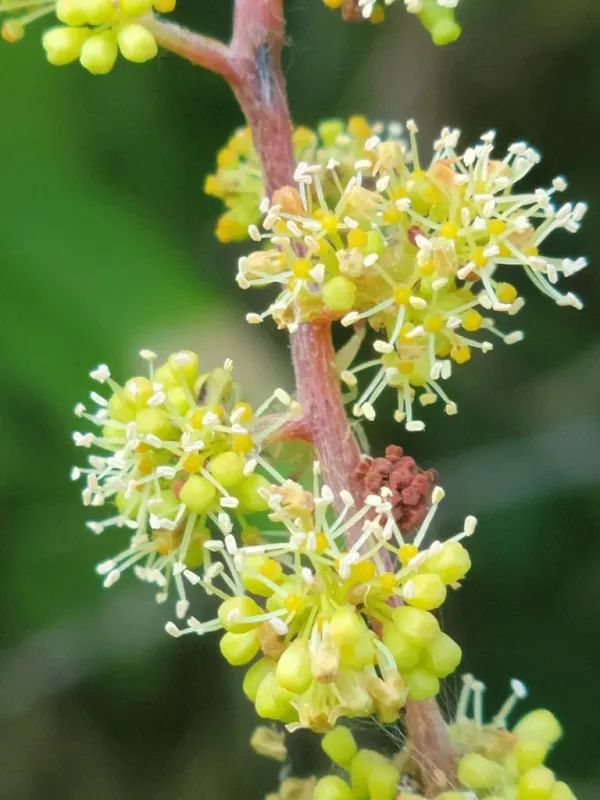
Description
Growing requirements
The New England grape (Vitis x novae-angliae) is a naturally occurring hybrid vine belonging to the Vitaceae family. It is a distinct botanical entity found in the northeastern regions of the United States, representing a blend of traits from local wild grape species.
This species is well-adapted to the temperate climate of the New England region, showing significant cold hardiness compared to common commercial Vitis vinifera varieties. Its biology is geared towards surviving harsh winter conditions and short growing seasons.
Regarding soil requirements, this vine thrives in well-drained, slightly acidic to neutral soils. It exhibits excellent growth on slopes or areas with good natural drainage, avoiding waterlogged conditions which are detrimental to its root health.
Botanically, it functions as a vigorous climber, utilizing tendrils to ascend woody vegetation. Its leaf structure and fruit morphology often display intermediate characteristics, reflecting its hybrid origin between parent species native to the Atlantic coast.
In terms of agricultural utility, the species is primarily valued as a germplasm resource. Breeders utilize its robust genes to introduce resistance to cold and specific environmental stressors into commercially viable grape rootstocks and cultivars.
Main diseases and pests
Like many species in the genus Vitis, the New England grape is susceptible to major fungal diseases including downy mildew (Plasmopara viticola) and powdery mildew (Erysiphe necator) during humid summers.
Insect pests such as the grape phylloxera pose a threat, although wild North American grape species generally possess a higher tolerance level than European cultivars, having co-evolved with the pest.
Black rot is another common issue that can impact fruit production, especially in areas with poor airflow and high humidity levels surrounding the canopy.
Management strategies involve maintaining proper vineyard hygiene, which includes pruning and thinning to maximize air circulation and reduce the duration of leaf wetness.
Bird predation is a significant challenge during the ripening process, as the small, flavorful berries are an attractive food source for local avian populations in the wild.