
Champin Grape
Vitis x champinii Planch.
Description
Growing requirements
Vitis x champinii Planch., commonly known as the Champin grape, is a distinct interspecific hybrid originating from Texas, USA. As a member of the Vitaceae family, it is a naturally occurring cross between Vitis candicans and Vitis rupestris, possessing biological traits that make it highly valuable in modern agriculture.
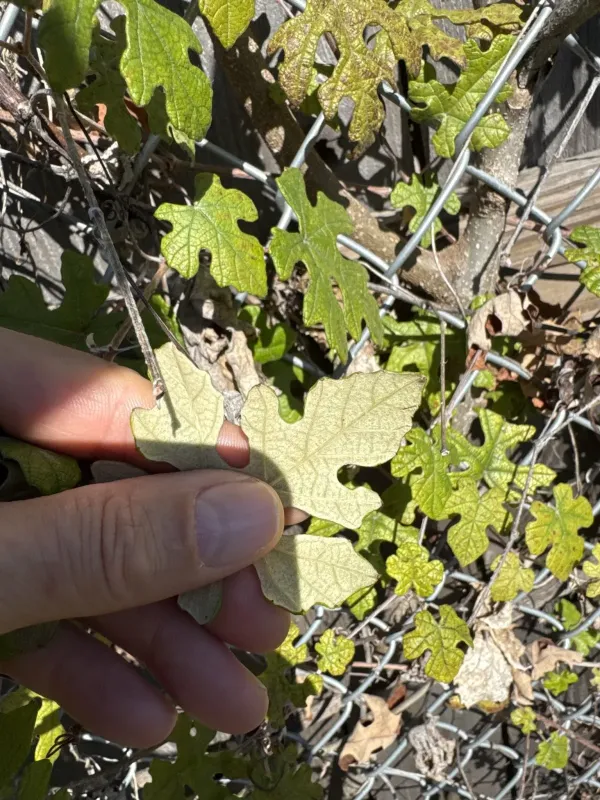
Botanically, this vine is recognized by its vigorous growth habit and a robust, deep-reaching root system. The foliage often features a characteristic downy pubescence on the underside, an evolutionary adaptation that helps the plant manage transpiration during the harsh, hot summers of its native environment.
The culture has specific pedological requirements, thriving in soils with high lime content that would typically induce iron-deficiency chlorosis in other vine species. This high tolerance to calcareous soil makes Vitis x champinii an essential genetic resource for breeding programs focused on rootstock development.
Regarding climate, the plant exhibits exceptional drought tolerance, allowing it to survive and maintain growth in arid conditions. It is best suited for warm to temperate climates where intensive sunlight and moderate water availability can be managed through proper site selection and soil management.
In commercial viticulture, the primary utilization of this species is its role as a rootstock. It is selected for its ability to confer vigor and environmental resilience to grafted scions, ensuring that vineyards established on difficult or nutrient-imbalanced soils remain productive and stable over time.
Main diseases and pests
The most significant agronomic advantage of the Champin grape is its high level of natural resistance to phylloxera, a devastating aphid-like pest that affects the roots of Vitis vinifera. By serving as a rootstock, it provides a crucial shield against this insect, protecting the integrity of the vineyard.
While highly resilient, the plant is susceptible to root rot if grown in heavy, waterlogged soils without proper drainage. Maintaining oxygen levels in the root zone through proper soil structure management is vital for the health and longevity of the mother vines in nursery operations.
Although Vitis x champinii shows inherent tolerance to several leaf diseases such as powdery mildew, the foliage may require monitoring during unusually humid seasons. Standard prophylactic measures should be employed in nursery settings to ensure the plant tissue remains healthy and vigorous.
Insect pests such as spider mites are rarely a major issue for this species, thanks to the texture and thickness of the leaves. Nevertheless, integrated pest management practices should be followed to maintain the overall phytosanitary quality of the propagating material intended for graft production.
Finally, controlling for grapevine viruses is of utmost importance. As a foundation for high-quality viticulture, all Vitis x champinii stock must be tested and confirmed free from viral pathogens to ensure that the longevity and vigor of the resulting grafted grapevines are not compromised in the field.