
Bailey grape
Vitis cinerea (Engelm.) Millardet var. baileyana (Munson) Comeaux
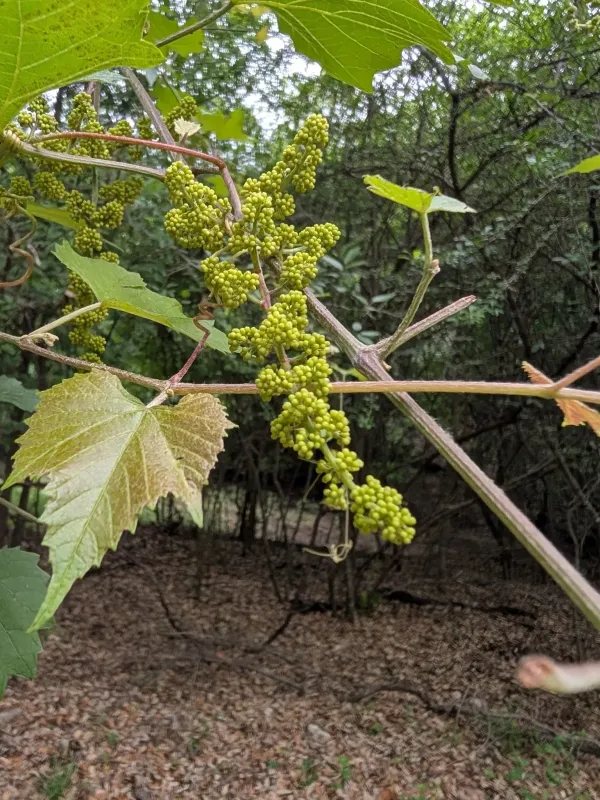
Description
Growing requirements
The Bailey grape belongs to the Vitaceae family. It is a vigorous woody vine native to the southeastern United States, naturally thriving in river floodplains and riparian forest environments.
Regarding soil requirements, the species prefers deep, fertile, and well-drained loams. However, it displays remarkable resilience to the fluctuating soil moisture levels typical of its native habitats.
The climate adaptation of Vitis cinerea var. baileyana is significant, as it handles intense summer heat effectively and exhibits good winter hardiness, making it a valuable subject for research.
Botanically, the plant is identified by its foliage, which often features a distinct grayish to white pubescence on the underside, and small, dark, high-acid berries that are not typically consumed for table use.
In modern viticulture, this species is primarily utilized as a genetic source for breeding programs. It is highly valued for developing resistant rootstocks and enhancing hybrid varieties with improved stress tolerance.
Main diseases and pests
One of the most notable agronomic traits of the Bailey grape is its high resistance to phylloxera, which has historically made it an essential asset for rootstock development in global viticulture.
The species possesses natural defenses against several fungal diseases, including downy mildew, although persistent high humidity can occasionally promote leaf spot infections in dense, unmanaged canopy areas.
Common vineyard pests such as leafhoppers or mites may occasionally affect the vines, but these issues are usually manageable through standard integrated pest management strategies.
Pruning and canopy management are critical components of maintaining the health of Bailey grapevines, ensuring optimal airflow and light penetration to discourage fungal development.
Monitoring the vineyard for symptoms of disease is recommended, as maintaining the plant's overall vigor is the best way to prevent the establishment of common pathogens.