
Graybark grape
Vitis cinerea (Engelm.) Engelm. ex Millardet var. helleri (L. H. Bailey) M. O. Moore
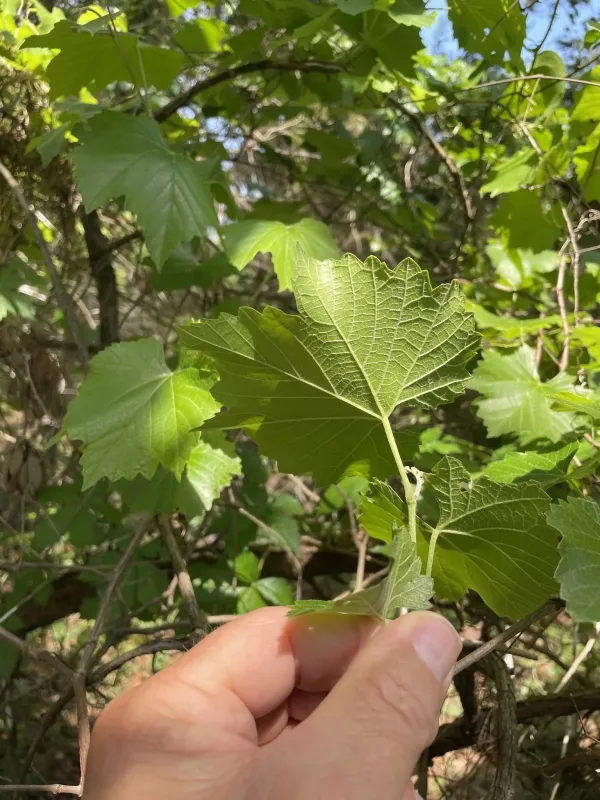
Description
Growing requirements
The graybark grape (Vitis cinerea) is a woody vine species belonging to the Vitaceae family. Native to the central and southeastern regions of North America, it thrives in floodplains and riparian forests, where it exhibits a vigorous, climbing growth habit.
Botanically, the species is distinguished by its dense, ash-gray pubescence on the underside of its leaves. This feature is a key identification marker and is indicative of its adaptation to diverse environmental conditions in its native range.
The plant thrives in deep, fertile, and moisture-retentive soils. Unlike many other vitis species, Vitis cinerea displays a remarkable tolerance to saturated soils, allowing it to survive in areas where other grape varieties might suffer from root rot.
Climatically, it requires a long growing season to achieve full maturity. It is highly valued for its winter hardiness, which is a desirable trait passed down to various hybrid rootstocks used in cold-climate viticulture across the globe.
In modern agriculture, its primary application is not for fruit production but as a robust rootstock. It provides excellent anchoring and vigor to grafted scions, enhancing their overall performance in challenging soil environments.
Main diseases and pests
Vitis cinerea is highly regarded by viticulturists for its significant resistance to phylloxera, the devastating aphid-like pest of grapevines. This genetic resistance has been extensively utilized in breeding programs to protect commercial vineyards.
The species possesses inherent resistance to common fungal pathogens, including downy mildew and powdery mildew. Its robust physiological profile helps it survive environmental stresses that typically weaken less adapted grape varieties.
While generally hardy, the vines may occasionally face issues with anthracnose in areas experiencing prolonged periods of humidity. Proper vineyard management, including spacing and air circulation, is crucial to mitigating these risks.
Pest management remains straightforward due to the species' natural defenses. Frequent monitoring for minor pests like leafhoppers or mites is advisable to ensure the health of the mother plants used for rootstock propagation.
As a rootstock, the compatibility with European scions is a subject of ongoing agronomic research. Selecting the right clonal selection ensures the best growth potential and long-term viability of the vineyard block.