
Reference · Crops
Cucurbits
The Cucurbitaceae family, commonly referred to as cucurbits, represents a vital group of agricultural crops, including pumpkins, squashes, cucumbers, melons, and watermelons. These plants are typically annual vines that utilize tendrils to climb or spread rapidly across the soil. Their fast growth rate and high yield potential make them essential components of global vegetable production.
142
sections
What the section contains
 Gynostemma pentaphyllum
Gynostemma
1 item
Gynostemma pentaphyllum
Gynostemma
1 item
 Heart-leaved squash
Cucurbita cordata
Heart-leaved squash
Cucurbita cordata
 Herpetospermum
2 items
Herpetospermum
Herpetospermum
2 items
 Hodgsonia
1 item
Hodgsonia
Hodgsonia
1 item
 Ibervillea
3 items
Ibervillea
Ibervillea
3 items
 Kedrostis
5 items
Kedrostis
Kedrostis
5 items
 Kiwano
Cucumis metulifer
Kiwano
Cucumis metulifer
 Lagenaria
1 item
Lagenaria
Lagenaria
1 item
 Lagenaria abyssinica
Lagenaria abyssinica
Lagenaria abyssinica
 Lagenaria breviflora
Lagenaria sphaerica
Lagenaria sphaerica
Lagenaria breviflora
Lagenaria breviflora
Lagenaria sphaerica
Lagenaria sphaerica
 Luffa
Luffa
3 items
Luffa
Luffa
3 items
 Luffa forsskalii
Luffa forsskalii
Luffa forsskalii
 Luffa graveolens
Luffa graveolens
Luffa graveolens
 Luffa operculata
Luffa operculata
Luffa operculata
 Lundell's Squash
Cucurbita lundelliana
Lundell's Squash
Cucurbita lundelliana
 Marah
Marah
3 items
Marah
Marah
3 items
 Marble bryony
Bryonia marmorata
Marble bryony
Bryonia marmorata
 Martinez pumpkin
Cucurbita martinezii
Martinez pumpkin
Cucurbita martinezii
 Melothria amplexicaulis
Melothria amplexicaulis
Melothria amplexicaulis
 Melothria fluminensis
Melothria fluminensis
Melothria fluminensis
 Melothria guadalupensis
Melothria guadalupensis
Melothria guadalupensis
 Melothria heterophylla
Melothria heterophylla
Melothria heterophylla
 Melothria pendula
Melothria pendula
Melothria pendula
 Momordica balsamina
Momordica balsamina
Momordica balsamina
 Momordica cabrae
Momordica calantha
Momordica calantha
Momordica cabrae
Momordica cabrae
Momordica calantha
Momordica calantha
 Momordica cardiospermoides
Momordica cardiospermoides
Momordica cardiospermoides
 Momordica cissoides
Momordica cissoides
Momordica cissoides
 Momordica cymbalaria
Momordica cymbalaria
Momordica cymbalaria
 Momordica dioica
Momordica dioica
Momordica dioica
 Momordica multiflora
Momordica multiflora
Momordica multiflora
 Momordica rostrata
Momordica rostrata
Momordica rostrata
 Momordica trifoliolata
Momordica trifoliolata
Momordica trifoliolata
 Neoalsomitra
2 items
Okeechobee Gourd
Cucurbita okeechobeensis
Neoalsomitra
Neoalsomitra
2 items
Okeechobee Gourd
Cucurbita okeechobeensis
 Pattypan squash
Cucurbita melopepo
Pattypan squash
Cucurbita melopepo
 Pedatifid-leaved squash
Cucurbita pedatifolia
Peponium
Peponium
2 items
Pedatifid-leaved squash
Cucurbita pedatifolia
Peponium
Peponium
2 items
 Psiguria
1 item
Raphidiocystis
Raphidiocystis
1 item
Psiguria
Psiguria
1 item
Raphidiocystis
Raphidiocystis
1 item
 Ribbed snake gourd
Trichosanthes costata
Rooting squash
Cucurbita radicans
Ribbed snake gourd
Trichosanthes costata
Rooting squash
Cucurbita radicans
 Ruthalicia
2 items
Ruthalicia
Ruthalicia
2 items
 Rytidostylis
1 item
Rytidostylis
Rytidostylis
1 item
 Sechiopsis
1 item
Sechiopsis
Sechiopsis
1 item
 Sechium tacaco
Sechium tacaco
Sechium tacaco
 Seyrigia
1 item
Seyrigia
Seyrigia
1 item
 Sicana
1 item
Sicana
Sicana
1 item
 Sicydium
1 item
Sicydium
Sicydium
1 item
 Sicyos
1 item
Sicyos
Sicyos
1 item
 Sicyos microphyllus
Sicyos microphyllus
Sicyos microphyllus
 Sicyos polyacanthos
Sicyos polyacanthos
Sicyos polyacanthos
 Siraitia
1 item
Siraitia
Siraitia
1 item
 Snake Gourd
Trichosanthes integrifolia
Snake Gourd
Trichosanthes integrifolia
 Spiny cucumber
Cucumis aculeatus
Spiny cucumber
Cucumis aculeatus
 Squirting cucumber
Ecballium
1 item
Squirting cucumber
Ecballium
1 item
 Squirting cucumber
Elaterium
2 items
Squirting cucumber
Elaterium
2 items
 Stinking Gourd
Momordica foetida
Stinking Gourd
Momordica foetida
 Syrian bryony
Bryonia syriaca
Syrian bryony
Bryonia syriaca
Marketplace
Products in this section · 12


Биоорганическое нано удобрение "НАГРО" / "NAGRO"
LLC NPO "BIOPLAN"
Fertilizers
43
25
1 offer
37.63 €per 1 kg
Buy





Cucurbits
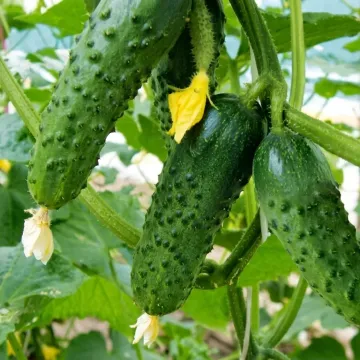
Originating from tropical and subtropical regions across the globe, cucurbits are now cultivated in diverse climates. They are characterized by their sensitivity to cold temperatures; therefore, in temperate regions, farmers prioritize planting after the risk of frost has passed. Sunlight exposure is a critical factor influencing both photosynthesis and the successful development of their large fruits.
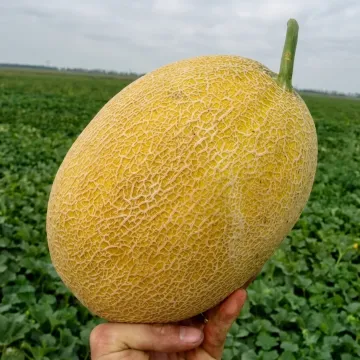
Botanically, these plants are defined by their wide, lobed leaves and monoecious flowers, which require effective pollination to set fruit. The fruit type is a berry known as a pepo, featuring a thick rind and numerous seeds. The root systems are extensive but often shallow, making these crops particularly sensitive to drought stress and requiring efficient irrigation management.
Successful cultivation depends on soil fertility, optimal soil structure, and appropriate pH levels. Crop management involves systematic fertilization, often focusing on nitrogen during the early growth stages and potassium during fruit development. In commercial operations, growers often use mulch to suppress weeds and maintain soil moisture, ensuring the plants reach their maximum production capacity.
Beyond human consumption, cucurbits are used in various industrial applications, including seed oil extraction and animal feed. Farmers must remain vigilant against major health threats to ensure profitable yields. Common challenges include:
- Powdery mildew
- Downy mildew
- Anthracnose
- Aphids
- Spider mites