
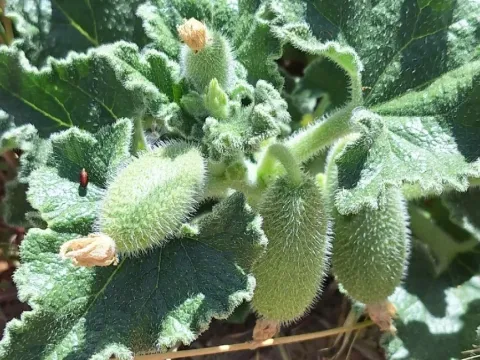
Squirting cucumber
Ecballium
Sowing Ecballium elaterium is best performed in the spring season when soil temperatures reach at least 15–18 degrees Celsius. Direct sowing in the final location is preferred as the plant develops a deep taproot that makes it highly sensitive to transplanting and root disturbance.
What the section contains

Squirting cucumber
The seeds should be planted at a depth of 2–3 centimeters in well-drained, light-textured soil. If starting seeds indoors, use biodegradable pots that can be placed directly into the ground to ensure that the root system remains completely undisturbed during the moving process.
Spacing between plants is a crucial factor for successful growth; it is recommended to keep a distance of at least 60 centimeters between individuals. This allows the trailing stems to spread naturally while ensuring adequate sunlight penetration to the center of the plant.
Before sowing, it is advisable to clear the area of aggressive perennial weeds. While the Squirting cucumber is a vigorous grower, it requires a clear start to establish its presence in the garden or field without competition for nutrients during its early developmental stage.
Considering the plant's unique method of seed dispersal, growers should select a location where the explosive release of seeds will not interfere with other crops. A perimeter zone should be established, as the plant can effectively propagate itself over several meters in a single season.
The Squirting cucumber belongs to the Cucurbitaceae family and thrives in Mediterranean-style climates. It requires full sun exposure and performs best in dry, rocky, or sandy soils that provide excellent drainage, as the plant is highly susceptible to root rot in saturated conditions.
Watering requirements are relatively low once the plant is established. As a drought-tolerant species, it relies on its deep root system to access moisture. Irrigation should be minimized and focused only on the soil, avoiding wetting the foliage to prevent the development of common fungal issues.
Soil fertility does not need to be excessively high; the plant is naturally adapted to survive in poor, alkaline soils. High nutrient levels, especially nitrogen, can lead to excessive vegetative growth at the expense of fruit production, which is the primary objective for those interested in its medicinal properties.
Temperature management is key to successful cultivation. The species is highly heat-loving and will enter dormancy or decline if temperatures drop significantly. Frost protection is non-existent for this plant, and it should be cultivated as an annual in regions with cold winters.
Maintenance involves routine checks of the plant's spread. Because it grows as a ground-cover, it can naturally shade out low-growing competitors. While it is low-maintenance, keeping the surrounding area tidy helps in preventing the buildup of pests that prefer sheltered, humid environments.
The most common fungal threats to the Squirting cucumber include powdery mildew and anthracnose. These conditions are often exacerbated by poor air circulation or high humidity, leading to leaf spotting and premature decline of the photosynthetic surface area.
Aphids and spider mites are the primary insect pests that target the plant during the hot summer months. These sap-sucking insects can quickly stunt growth, cause leaf curling, and act as vectors for various plant viruses, which are difficult to manage once established.
Cultural control, such as improving spacing between plants and removing affected plant parts immediately, is the most effective way to manage these threats without relying on intensive chemical applications that might affect the chemical composition of the plant's fruits.
Slugs and snails can be problematic for young seedlings. A perimeter of coarse sand or gravel can deter these pests from reaching the emerging stems, providing a simple yet effective barrier during the most vulnerable stage of the plant's life cycle.
When implementing pest control, it is essential to remember that the plant contains bioactive compounds, specifically cucurbitacins, which are potent. Any treatment must account for the plant's toxicity to ensure safety for both the grower and the potential harvest.