
Momordica dioica
Momordica dioica
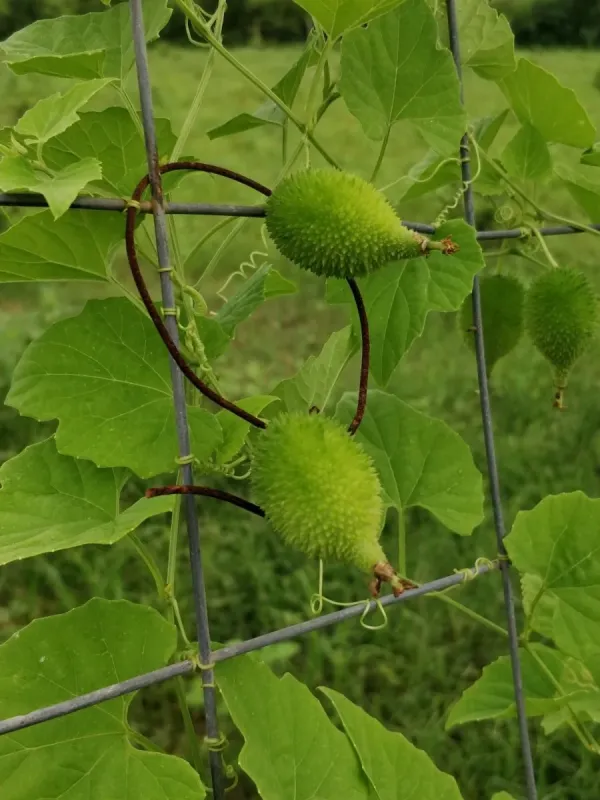
Description
Sowing dates
Momordica dioica, commonly known as spiny gourd or teasle gourd, is a perennial flowering vine belonging to the Cucurbitaceae family. Unlike its relatives, this plant produces tuberous roots that allow for seasonal regrowth in warmer climates.
Propagation is primarily achieved through seeds or vegetative division of the tuberous roots. Seeds should be scarified before planting to break their hard coat, significantly improving germination rates and uniformity of emergence.
The optimal germination temperature ranges between 25 and 30 degrees Celsius. In temperate regions, seedlings should be started indoors to ensure a long enough growing season for the vine to mature and bear fruit.
Transplanting occurs only when soil temperatures are consistently high, as the plant is extremely sensitive to chilling injury. A frost-free period is mandatory for successful establishment and future yield production.
Because the species is dioecious, gardeners must ensure a balanced presence of both male and female plants in the field to facilitate pollination. Vegetative propagation from tubers is a preferred method to guarantee plant gender.
Growing requirements
The crop requires full sun exposure and protection from strong, drying winds. It thrives in well-drained, fertile sandy loam soils that are rich in organic matter and have a neutral pH level.
As a vigorous climbing vine, Momordica dioica requires robust trellising systems. Vertical growing methods are essential to maintain fruit quality, prevent soil-borne diseases, and ensure sufficient airflow for the foliage.
Consistent moisture is vital, especially during the flowering and fruiting stages. However, waterlogging must be avoided, as the root system is highly susceptible to decay in stagnant, heavy soils.
Balanced fertilization is key to supporting rapid vine growth. Incorporating compost or well-rotted manure during land preparation, followed by side-dressing with potassium-rich fertilizers, promotes healthy fruit development.
Regular weeding and soil aeration are necessary to maintain healthy growth. Mulching around the base of the plant helps conserve soil moisture and suppresses weed competition throughout the active season.
Yield
The economic utility of Momordica dioica lies in its immature fruit, which is highly valued for its nutritional density, including vitamins, minerals, and antioxidants. It is a staple vegetable in various traditional culinary practices.
Yield performance is highly dependent on pollinator activity, such as bees, which are essential for fruit set in dioecious species. High-density planting without proper pollination leads to a significant decrease in output.
Fruits are harvested in their tender, immature state while the color remains vibrant green. Delaying harvest results in tough, fibrous fruits that are typically relegated to seed production or discarded.
The tubers of the plant are also edible and contain starch, offering an additional harvestable yield. This dual-purpose utility makes the crop highly attractive for small-scale sustainable agricultural systems.
Strategic pruning of the vine can encourage lateral branch development, potentially increasing the total number of fruits per plant. The harvesting period typically spans several weeks if conditions remain favorable.
Main diseases and pests
Common pests include aphids, spider mites, and fruit flies, which can cause significant damage to foliage and ripening fruits. Integrated pest management strategies are recommended to keep populations below economic thresholds.
Fungal diseases like downy mildew and powdery mildew are prevalent in humid environments. Proper plant spacing and avoiding overhead irrigation are critical preventative measures to reduce disease incidence.
Root rot caused by soil pathogens can be devastating if drainage is inadequate. Ensuring that the soil structure is friable and well-aerated is the best defense against these underground threats.
Biological control agents, such as neem oil or insecticidal soaps, are often utilized to protect the crop. Strict monitoring is advised to detect early signs of infestation and apply corrective actions immediately.
- Use of disease-resistant seeds
- Regular crop rotation schedules
- Sanitation of gardening tools
- Application of organic mulches
- Maintaining adequate plant spacing
Harvesting
Harvesting is a manual process requiring precision to avoid damaging the vine. A sharp blade should be used to snip the fruit stalk, ensuring that the main stem remains intact for further fruit development.
Freshly harvested produce has a relatively short shelf life. To maintain quality, fruits should be cooled immediately after harvest and stored in a cool, ventilated environment until consumption or market distribution.
For tuber harvesting, the foliage is cut back after the first signs of senescence. The tubers are then carefully lifted from the soil, cleaned, and stored in a dry, dark place during the dormant period.
Handling must be gentle, as the skin of the fruit is easily bruised. Bruised fruits are prone to secondary bacterial infections, which rapidly deteriorate the harvest quality and reduce marketability.
Seed harvesting involves allowing a few high-quality fruits to fully ripen until they turn yellowish-orange. The seeds are extracted, washed to remove pulp, dried in the shade, and stored in breathable containers.