
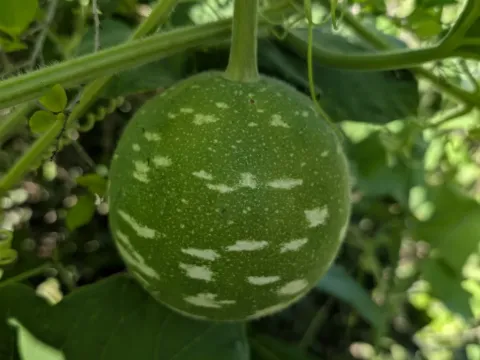
Lagenaria
Lagenaria
Lagenaria is a heat-loving crop with a long vegetation cycle, requiring a nursery approach in temperate regions. Seeds should be sown indoors 30–35 days before the expected last frost date.
What the section contains

Lagenaria
The seed coat is exceptionally hard and impermeable, often requiring scarification or a 24-hour soak in warm water or growth stimulators to ensure uniform germination.
Optimal germination requires steady temperatures between +25°C and +28°C. Dropping below +20°C significantly stunts the development of seedlings and may lead to root rot.
Transplanting into the field must only occur once the risk of frost has passed and soil temperatures have consistently reached at least +15°C at a depth of 10 cm.
Plants should be spaced widely, typically 0.5–0.7 meters apart for trellis systems or up to 1.5 meters for ground trailing, to accommodate their vigorous growth.
A member of the Cucurbitaceae family, Lagenaria shares many biological characteristics with cucumbers and squash but requires more intensive warmth and a longer growing season.
The plant thrives in fertile, well-draining, loamy soils with a neutral or slightly acidic pH. Avoid waterlogged conditions, which lead to rapid decay of the taproot system.
Lagenaria is extremely sensitive to cold snaps. Even a mild drop below +10°C can cause the plant to enter a state of dormancy or stress, hindering fruit production.
Regular irrigation is essential, especially during the flowering and fruit-setting stages. Water should be applied at the base of the plant to keep leaves dry and reduce disease risk.
Nutrient management is critical; apply a balanced NPK fertilizer early in the season, shifting to higher potassium and phosphorus levels once flowering begins to support fruit development.
Yield is highly dependent on effective pollination and vine management. Since Lagenaria flowers bloom in the evening, they rely on nocturnal pollinators, which may be sparse in some areas.
Hand-pollination is a recommended strategy to maximize yield: simply transfer pollen from the male flowers to the stigma of the female flowers using a small brush.
Pruning lateral shoots is a standard practice to direct energy towards fruit production. This prevents the plant from wasting resources on excessive foliage and ensures larger, healthier gourds.
For culinary use, harvest young fruits when they are 20–30 cm long. In this stage, the fruit is soft and palatable, similar to summer squash or zucchini in texture.
Total yield per plant varies depending on the cultivar and environmental conditions, typically ranging from 5 to 10 mature fruits per strong vine under good management.
Powdery mildew is the most common fungal issue, appearing as white dust on foliage. It spreads rapidly in high humidity and poorly ventilated environments, requiring timely treatment.
Root rot is often a result of over-irrigation or cold, damp soil conditions. Once established, it is difficult to remediate, so prevention through proper soil structure is key.
Aphids are frequent pests that congregate on the undersides of leaves. Early detection is vital to prevent leaf curling and the spread of viral diseases carried by these insects.
Spider mites thrive in hot, arid conditions, causing leaves to turn yellow and mottled. Miticides or regular misting of foliage can help mitigate these infestations.
Adhering to strict crop rotation protocols is the primary defense against soil-borne pathogens. Avoid planting Lagenaria in soil recently occupied by other cucurbits.
Harvesting for food must occur while the fruit is still immature. Once the skin begins to harden, the flesh becomes fibrous and is no longer suitable for standard culinary preparation.
For ornamental or utility purposes, leave the gourds on the vine for as long as possible, ideally until the first frost kills the foliage. This ensures maximum wall thickness.
Cut the fruit from the vine with a sharp knife, leaving a 5–10 cm stem attached. This "handle" prevents moisture from entering the gourd and causing it to rot during storage.
Drying is a slow process that requires a cool, dry, and well-ventilated area. Gourds are fully cured when they become lightweight and the seeds rattle audibly inside when shaken.
Once dried and cleaned, the hard shell of the Lagenaria can be sanded, carved, or painted, making it an excellent medium for artisan crafts, musical instruments, and vessels.