
Seyrigia
Seyrigia
Sowing Seyrigia seeds requires maintaining high temperatures, as this culture is a heat-loving endemic. The optimal time for sowing is late spring, when the soil reaches 20-25 degrees Celsius.
What the section contains

Seyrigia
Seeds should be sown in a loose, well-drained substrate mixed with sand or perlite. The planting depth should not exceed 1-2 centimeters, which facilitates uniform germination without the risk of rotting.
To speed up germination, containers should be covered with glass or film. It is crucial to maintain stable humidity without overwatering, which is fatal for young seedlings.
Once the first true leaves appear, the plants must be transplanted into individual pots. This stage is critical because the root system of Seyrigia is sensitive to damage during repotting.
In greenhouse conditions, sowing times can be moved earlier if additional artificial lighting is provided to ensure strong growth.
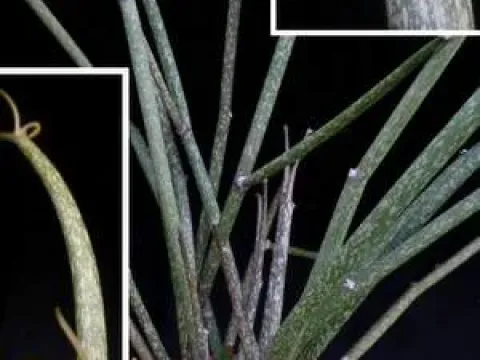
Seyrigia belongs to the Cucurbitaceae family and is an unusual succulent vine native to the arid regions of Madagascar. The plant is adapted to survive in conditions with limited rainfall.
The primary requirements for growth include an abundance of bright sunlight throughout the day. In shade, the stems become elongated, losing their characteristic shape and decorative appeal.
The soil mixture must have excellent aeration and high water permeability. Substrates designed for cacti and succulents, mixed with turf soil, are ideal for this purpose.
High temperatures are necessary: in summer, it is preferred to keep the plant between +25...+30 °C, while in winter, it can tolerate a drop to +15 °C. Sharp temperature fluctuations and drafts must be avoided at all costs.
Watering should be moderate during the growing season. During the winter dormancy period, watering should be almost entirely withheld, keeping only enough moisture to prevent root desiccation.
The main threat to Seyrigia is root rot caused by excessive soil moisture. Fungal infections can quickly attack the stems, leading to the rapid decline of the entire plant.
Among pests, sucking insects such as spider mites and mealybugs pose the greatest danger. These typically appear when the microclimate is disrupted, especially in overly dry indoor air.
To manage pests, systemic insecticides and acaricides should be used according to the manufacturer's instructions. Regular inspections of the stems and leaf undersides are highly recommended.
In case of fungal infection, immediate repotting is required, removing damaged parts of the root system and treating the remaining roots with broad-spectrum fungicides.
To prevent future infestations, it is essential to maintain a clean growing environment and ensure good air circulation around the vines.