
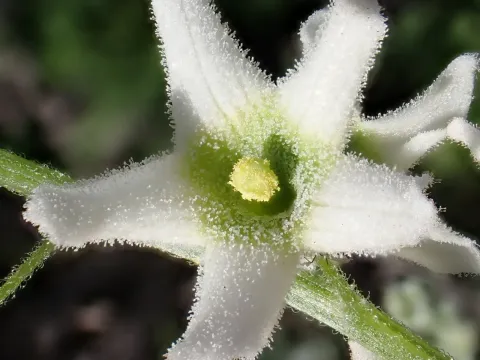
Marah
Marah
Sowing Marah seeds requires careful preparation, as they are encased in a tough seed coat that often needs scarification to trigger germination.
What the section contains


Marah
In temperate zones, the seeds should be planted in the spring once the soil temperature is consistently warm and the threat of frost has passed.
The seeds are typically placed at a depth of 3 to 5 centimeters in loose, well-draining soil to ensure robust seedling emergence.
If started indoors, seeds should be sown in individual, deep biodegradable pots to prevent any root disturbance during the eventual transplanting process.
Proper spacing is critical for Marah, as the plant develops into a vigorous vine that requires at least one meter of space to spread effectively.
Marah is a genus of perennial climbing plants in the Cucurbitaceae family, characterized by its massive, water-storing taproot systems.
The plant thrives in fertile, well-draining soil types, showing high sensitivity to waterlogged conditions that can cause root decay.
Exposure to direct sunlight is necessary for the plant to achieve full growth potential, though some protection from intense afternoon heat is beneficial in desert climates.
Marah requires a consistent, moderate irrigation schedule during the peak growing season to support its fast-growing, extensive foliage.
As a warm-climate species, Marah is highly sensitive to freezing temperatures, which can damage the stems and retard overall development.
Powdery mildew is the most prevalent threat to Marah plants, particularly when grown in conditions with poor air circulation and high humidity.
Root rot remains a primary concern for growers, usually resulting from excessive irrigation or soil that fails to drain water efficiently.
Pests such as aphids and spider mites frequently colonize the vine during dry spells, potentially weakening the plant by sucking sap from tender leaves.
Slugs and snails can cause significant damage to early-season growth, often stripping young leaves and stems overnight.
Integrated pest management, including regular inspection and good field sanitation, is essential for maintaining the health of a Marah plantation.