
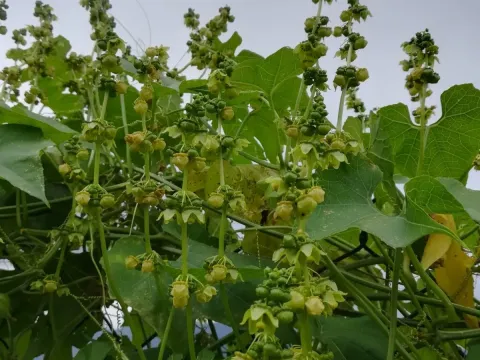
Sechiopsis
Sechiopsis
Sechiopsis is an interesting genus within the Cucurbitaceae family, originating from the mountainous regions of Mexico. This climbing vine requires specific climate conditions, thriving best when temperatures remain consistently warm throughout the growing cycle.
What the section contains

Sechiopsis
Sowing should ideally occur once all risks of frost have passed. Seeds benefit from being soaked in tepid water for several hours before planting to soften the seed coat and encourage faster germination under warm conditions.
When starting seeds, it is important to provide sufficient spacing of at least 80 to 100 centimeters between plants. This layout allows for optimal airflow, which is critical for reducing the moisture levels that promote fungal outbreaks in the foliage.
For colder climates, starting seedlings in protected containers inside a greenhouse is recommended. Once the outdoor soil temperature reaches 15 degrees Celsius, the young plants can be transplanted carefully to minimize root disturbance.
The soil should be prepared with organic matter prior to sowing. Incorporating high-quality compost into the planting holes provides the initial nutrients necessary for the rapid vine development that characterizes this botanical genus.
Sechiopsis demands full sun exposure to thrive, as it is a vigorous grower that needs significant light energy to produce its leafy biomass. Shaded environments will result in spindly growth and poor flowering performance.
Well-draining, loose, and fertile soil is essential for this plant. While it is adaptable to different soil types, it performs best in soils with high organic content that can retain moderate moisture without becoming waterlogged.
Regular irrigation is vital during the peak growing season, particularly when the plant starts to bloom. Water should be applied directly at the base of the plant to keep the leaves dry, which serves as a primary preventative measure against disease.
Trellising is a mandatory requirement for cultivating Sechiopsis. Because of its nature as a climber, it needs strong support structures such as wire mesh or wooden trellises to lift the vines off the ground and facilitate better pollination.
Maintaining a layer of organic mulch around the base of the plant helps regulate soil temperature and keeps weeds at bay. This practice also ensures that the root zone remains consistently moist during hot summer days.
The crop is susceptible to common cucurbit diseases, with powdery mildew being the most prevalent. This fungal infection often appears as white dust on the leaves, especially if humidity levels are high and air circulation is restricted.
Aphids are frequent pests that colonize the undersides of the leaves and growing tips. They feed on plant sap, causing the leaves to curl and yellow, while also potentially transmitting viral diseases to the host plant.
Spider mites are common in dry, hot conditions and can cause extensive damage to the foliage by piercing plant cells. Early detection and the use of insecticidal soaps are effective methods for managing mite infestations before they spread.
Root rot remains a potential threat if the soil remains excessively wet or poorly aerated. Proper drainage is the most effective way to prevent these soil-borne pathogens from compromising the plant's structural integrity.
Integrated pest management strategies are recommended, including regular scouting and the removal of affected plant tissue. By rotating the planting site every three years, farmers can significantly reduce the pressure from soil-borne diseases.