
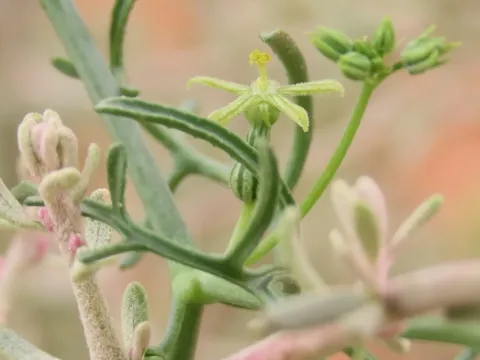
Kedrostis
Kedrostis
Seeds of Kedrostis are sown primarily during the spring period when stable warm weather is established. For successful germination, it is necessary to maintain soil temperatures between 22 and 25 degrees Celsius.
What the section contains


Kedrostis
Sowing is carried out in a light, well-drained substrate consisting of a mixture of sand, perlite, and leaf soil. The seeds are covered lightly to maintain the required moisture level.
A crucial condition is the use of a sterile substrate to avoid infection of young seedlings by soil fungi. The containers with crops are covered with glass or film to create a greenhouse effect until the first true leaves appear.
After germination, the seedlings are gradually accustomed to the open air by removing the cover for a few hours a day. Pricking out is performed upon the development of the second pair of true leaves, taking care not to damage the delicate root system.
The plant is also capable of vegetative reproduction, although seed propagation is preferred for maintaining genetic diversity and forming a pronounced caudex.
Kedrostis belongs to the Cucurbitaceae family and is a perennial herbaceous vine, often forming a basal caudex — a thickened stem designed for moisture storage.
The plant requires bright diffused lighting; however, during peak noon hours, it needs protection from direct sunlight, which can cause leaf burns.
The culture is not too demanding regarding soil types but is extremely sensitive to water stagnation, so installing a strong drainage layer at the bottom of the pot or plot is mandatory.
During the active growing season, moderate watering is necessary, and the top layer of soil must dry out completely between waterings to prevent rotting of the caudex.
The temperature regime in summer should be between 20 and 30 degrees, while during the dormant period, the plant is best kept at approximately 15 degrees Celsius.
The main problems in cultivation are associated with excessive humidity, which leads to the development of root rots and fungal infections of the caudex.
Pests that pose a threat include spider mites and mealybugs, which actively multiply in conditions of low air humidity.
To prevent infestation, it is necessary to regularly inspect the underside of leaves and internodes, where insect colonies often congregate.
When pests are detected, systemic insecticides or acaricides should be used, strictly adhering to the dosages indicated by the manufacturer for cucurbit crops.
- Regular ventilation of greenhouses or rooms.
- Limiting watering during cloudy weather.
- Preventive treatment with bio-fungicides.