
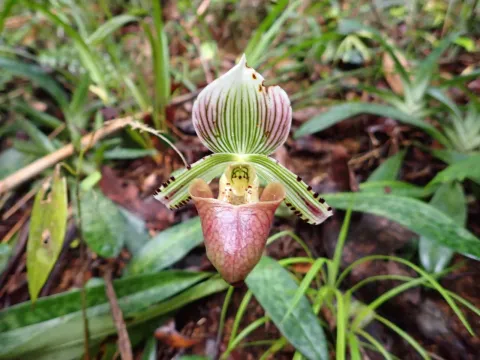
Paphiopedilum
Paphiopedilum
Paphiopedilum, commonly known as the lady slipper orchid, is a genus of perennial herbaceous plants belonging to the Orchidaceae family. Native to the tropical regions of Southeast Asia, these plants are renowned for their unique, pouch-like labellum that acts as a specialized pollination mechanism.
What the section contains
 Paphiopedilum acmodontum
Paphiopedilum acmodontum
Paphiopedilum acmodontum
 Paphiopedilum adductum
Paphiopedilum adductum
Paphiopedilum adductum
 Paphiopedilum argus
Paphiopedilum argus
Paphiopedilum argus
 Paphiopedilum armeniacum
Paphiopedilum armeniacum
Paphiopedilum armeniacum
 Paphiopedilum barbatum
Paphiopedilum barbatum
Paphiopedilum barbatum
 Paphiopedilum beyrodtianum
Paphiopedilum beyrodtianum
Paphiopedilum beyrodtianum
 Paphiopedilum callosum
Paphiopedilum callosum
Paphiopedilum callosum
 Paphiopedilum charlesworthii
Paphiopedilum charlesworthii
Paphiopedilum charlesworthii
 Paphiopedilum concolor
Paphiopedilum concolor
Paphiopedilum concolor
 Paphiopedilum delenatii
Paphiopedilum delenatii
Paphiopedilum delenatii
 Paphiopedilum glaucophyllum
Paphiopedilum glaucophyllum
Paphiopedilum glaucophyllum
 Paphiopedilum godefroyae
Paphiopedilum godefroyae
Paphiopedilum godefroyae
 Paphiopedilum haynaldianum
Paphiopedilum haynaldianum
Paphiopedilum haynaldianum
 Paphiopedilum hirsutissimum
Paphiopedilum hirsutissimum
Paphiopedilum hirsutissimum
 Paphiopedilum hybrids
Paphiopedilum hybrids
Paphiopedilum hybrids
 Paphiopedilum lawrenceanum
Paphiopedilum lawrenceanum
Paphiopedilum lawrenceanum
 Paphiopedilum leeanum
Paphiopedilum leeanum
Paphiopedilum leeanum
 Paphiopedilum Maudiae
Paphiopedilum maudiae
Paphiopedilum Maudiae
Paphiopedilum maudiae
 Paphiopedilum philippinense
Paphiopedilum philippinense
Paphiopedilum philippinense
 Paphiopedilum primulinum
Paphiopedilum primulinum
Paphiopedilum primulinum
 Paphiopedilum purpuratum
Paphiopedilum purpuratum
Paphiopedilum purpuratum
 Paphiopedilum rothschildianum
Paphiopedilum rothschildianum
Paphiopedilum rothschildianum
 Paphiopedilum sangii
Paphiopedilum sangii
Paphiopedilum sangii
 Paphiopedilum schoseri
Paphiopedilum schoseri
Paphiopedilum schoseri
 Paphiopedilum spicerianum
Paphiopedilum spicerianum
Paphiopedilum spicerianum
 Paphiopedilum venustum
Paphiopedilum venustum
Paphiopedilum venustum
 Paphiopedilum villosum
Paphiopedilum villosum
Paphiopedilum villosum
 Paphiopedilum wardii
Paphiopedilum wardii
Paphiopedilum wardii
 Paphiopedilum wenshanense
Paphiopedilum wenshanense
Paphiopedilum wenshanense
Paphiopedilum
Botanically, these orchids are sympodial but lack pseudobulbs, relying on their fleshy, hairy roots to absorb water and nutrients. The foliage is typically evergreen, often featuring attractive mottling, which remains ornamental throughout the entire year, providing aesthetic value even when the plant is not blooming.
Successful cultivation requires specific climatic conditions, often categorized by the plant's natural habitat. Terrestrial and lithophytic species need a well-aerated substrate consisting of pine bark, perlite, charcoal, and limestone chips to mimic their natural soil environment and ensure appropriate pH levels.
Watering must be precise, aiming to keep the media moist but never soggy. Stagnant water at the base of the crown is highly detrimental, frequently leading to fatal stem rot. High humidity levels, ideally between 60-70%, are essential for vigorous growth, provided that air circulation remains constant.
In commercial horticulture, Paphiopedilum is prized for its exceptional durability and longevity of its flowers, which can last for several weeks. This makes them a premium choice for high-end floral design, international orchid shows, and specialized plant collections managed by hobbyists and professional botanical gardens.
The primary threats to Paphiopedilum health are fungal pathogens, such as Erwinia and Fusarium, which thrive in poorly ventilated, overly wet environments. Preventing these diseases involves maintaining strict sanitation, proper potting media management, and ensuring adequate airflow around the root zone.
Common pests include mealybugs, scale insects, and spider mites, which often colonize the underside of the leaves or hidden crevices near the base. Integrated pest management, including regular visual inspection and the application of horticultural oils or systemic pesticides, is necessary to maintain a healthy plant stock.