
Paphiopedilum hirsutissimum
Paphiopedilum hirsutissimum
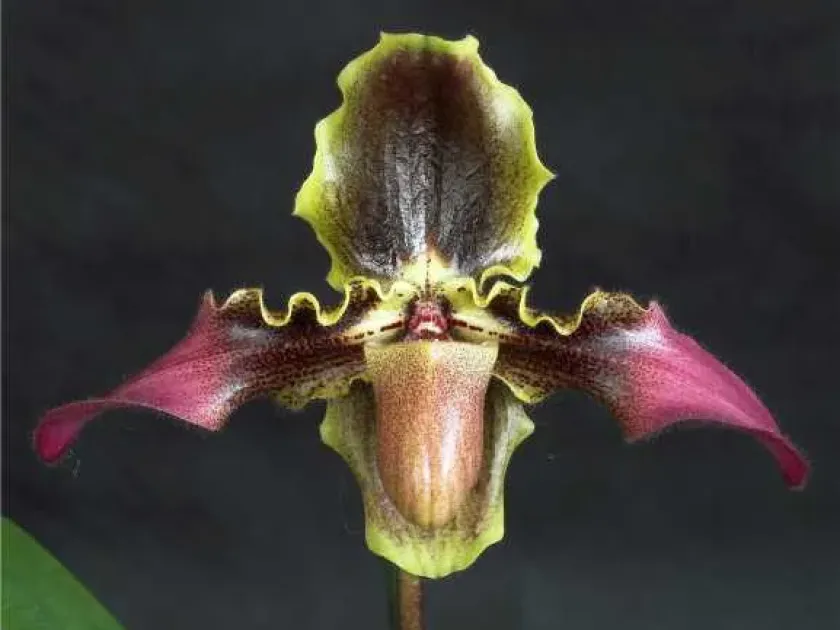
Description
Growing requirements
Paphiopedilum hirsutissimum belongs to the Orchidaceae family and is a rare slipper orchid species naturally distributed across the Himalayan foothills and Southeast Asia.
This species thrives in high-elevation montane forests, requiring a climate with cool, distinct nights and moderate daylight temperatures to trigger its complex flowering cycle.
Cultivation requires a specialized, well-draining substrate typically consisting of bark, perlite, and charcoal, which ensures optimal aeration for the sensitive root system.
Humidity management is crucial; the plant performs best at levels between 60% and 80%, necessitating the use of humidifiers or humidity trays in domestic environments.
Light levels should remain filtered and bright, avoiding harsh, direct sunlight that can cause chlorosis or severe heat stress to the hairy, evergreen foliage.
Main diseases and pests
The most common pests affecting this species are spider mites, which proliferate in dry conditions and can cause significant damage to the leaf structure.
Root rot caused by Oomycetes and various Fusarium species is a major threat that usually stems from overwatering and poor drainage within the potting media.
Mealybugs can often hide in the dense, hairy surfaces of the leaves and stems, requiring systematic manual inspection and periodic application of horticultural oils.
Disease prevention is managed through good hygiene, such as sterilizing tools before pruning and ensuring that the foliage remains dry during cooler overnight periods.
If viral symptoms occur, characterized by irregular chlorotic spotting, the affected specimen should be isolated immediately to prevent transmission via pests or handling.