
Paphiopedilum lawrenceanum
Paphiopedilum lawrenceanum
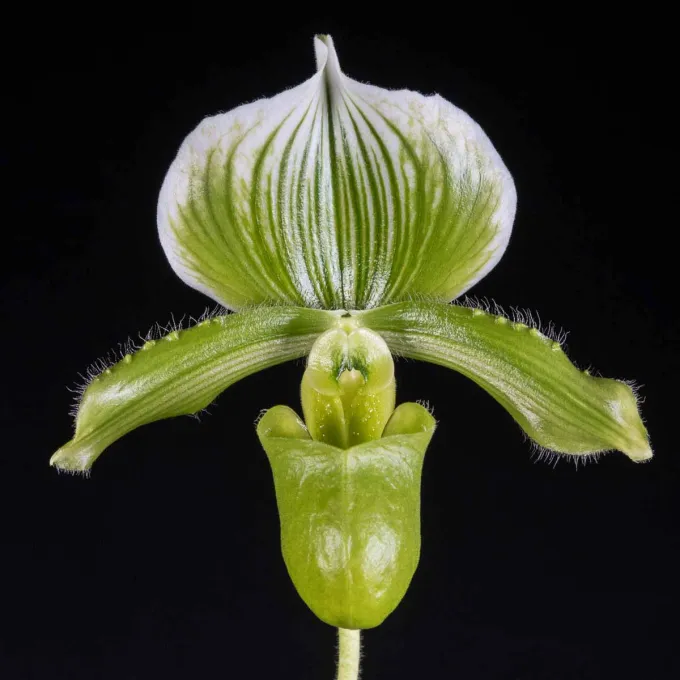
Description
Growing requirements
Paphiopedilum lawrenceanum belongs to the Orchidaceae family and is native to the island of Borneo. In its natural habitat, it thrives as a terrestrial plant on limestone-rich substrates within shaded forest floors.
For cultivation purposes, a stable environment with temperatures between 18°C and 24°C is essential. These orchids require high levels of atmospheric humidity to maintain turgor pressure in their leaves and roots.
The potting medium must be porous and well-draining, typically consisting of a mix of bark, perlite, charcoal, and limestone chips to provide necessary calcium. Proper aeration is critical for long-term root health.
Light levels should remain low to moderate, mimicking the dappled shade of a canopy. Direct exposure to intense sunlight will invariably damage the plant tissue and reduce overall vitality.
Watering should be performed carefully, ensuring the substrate remains evenly moist but never waterlogged. Using reverse osmosis or distilled water is recommended to prevent mineral salt buildup in the pot.
Main diseases and pests
Root rot is the most significant threat to Paphiopedilum lawrenceanum, usually caused by overwatering and poor ventilation. Providing excellent drainage is the best preventative strategy.
Pests such as spider mites and mealybugs can infest the foliage, particularly in environments with low humidity. Regular monitoring and physical removal are the first lines of defense.
Bacterial soft rot can quickly affect the crown of the plant if water remains trapped in the leaf axils after irrigation. Proper air circulation around the crown area is vital to mitigate this risk.
Fungal leaf spot diseases are also common in high-humidity indoor settings and should be treated with appropriate horticultural fungicides at the first sign of symptoms.
Nutrient deficiency or toxicity can occur if the pH level of the substrate drifts, highlighting the importance of regular substrate replacement every 18–24 months.