
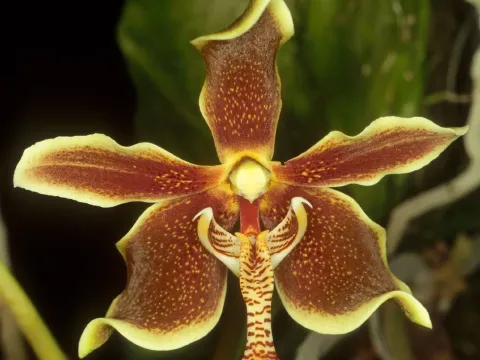
Paraphalaenopsis
Paraphalaenopsis
Paraphalaenopsis is a unique genus of epiphytic plants belonging to the Orchidaceae family. These plants are native to the island of Borneo, where they thrive in warm and humid tropical rain forest environments.
What the section contains


Paraphalaenopsis
The botanical highlight of this genus is its long, pendulous, cylindrical leaves, often described as rat-tail shaped. This distinctive morphology is an evolutionary adaptation to the high moisture and light conditions of their natural habitat.
To cultivate these orchids successfully, one must maintain consistent tropical conditions. Temperatures should remain within a stable range, avoiding sudden cold drafts which can damage the delicate root system.
High relative humidity, ideally between 70 and 80 percent, is essential for healthy growth. Without sufficient moisture, the plant's ability to maintain its foliage turgor is severely compromised.
The potting medium must provide excellent drainage and aeration. Epiphytic-grade bark is typically used to prevent root suffocation, which is a common cause of failure in domestic orchid cultivation.
Fungal rots are the most significant threat to Paraphalaenopsis, often triggered by water remaining in the leaf axils after irrigation. Proper air circulation is vital to mitigate this risk significantly.
Spider mites are common pests that thrive in the dry environments sometimes found in indoor settings. They feed on the sap of the long leaves, causing visible yellowing and tissue damage.
Mealybugs and scale insects may also infest the plant, particularly in sheltered areas where the leaves meet the base. Regular inspection is necessary to keep these pest populations under control.
Bacterial infections can progress rapidly if the plant is kept in overly wet or poorly ventilated conditions. Once spotted, infected areas should be treated with appropriate botanical fungicides.
Maintaining a clean growing environment and avoiding high-nitrogen fertilizers in late autumn helps in preventing weakened tissues that are more susceptible to pathogen attacks during dormant periods.