
Paphiopedilum villosum
Paphiopedilum villosum
Description
Growing requirements
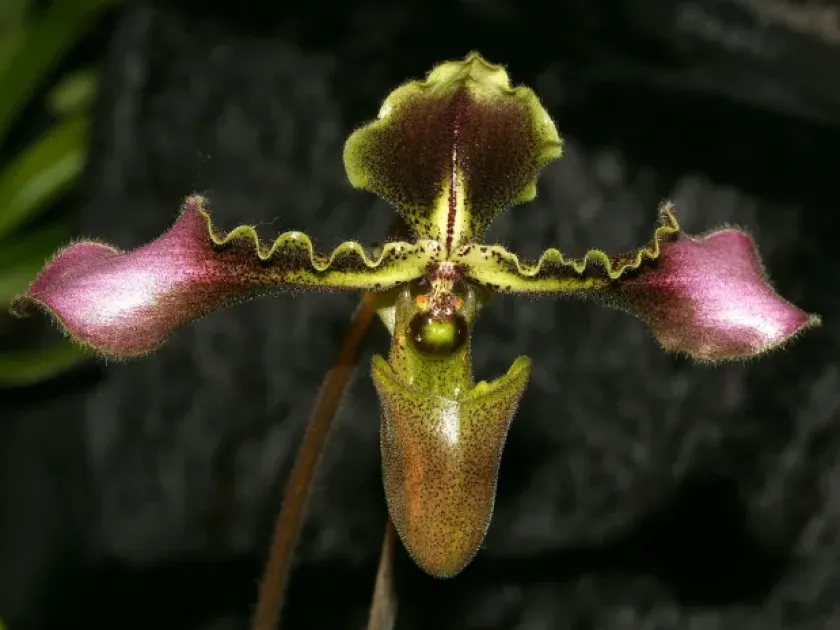
Paphiopedilum villosum is a notable species within the Orchidaceae family, characterized by its distinctive hairy-textured floral parts. Native to the mountainous regions of Northeast India, Myanmar, and Thailand, it grows as a lithophyte or epiphyte in humid forest environments.
Successful cultivation requires a cool to intermediate temperature regime. Daytime temperatures should ideally range between 18°C and 22°C, while night temperatures should be lowered to approximately 12°C to 15°C to initiate the development of the inflorescence.
The substrate must be highly aerated and mimic the natural forest floor conditions. A typical commercial mix includes medium-grade conifer bark, perlite, charcoal, and a mineral supplement, such as limestone chips, to maintain the necessary calcium levels for healthy growth.
Light requirements for this species are relatively moderate compared to other orchids. It thrives in diffused, filtered light. Exposure to direct intense sunlight is strictly avoided to prevent thermal stress and foliar bleaching, which significantly hinders plant vitality.
Watering practices must be meticulous; the roots require constant moisture but cannot tolerate waterlogging. The use of high-quality, low-mineral water is recommended to prevent salt accumulation in the root zone, which can lead to severe root tip necrosis.
Main diseases and pests
The primary horticultural threats to this species include root rot and crown rot, commonly caused by stagnant moisture and poor substrate aeration. Maintaining proper airflow around the plant base is essential for preventing these fungal pathogens.
Pest management focuses on controlling common orchid enemies such as mealybugs, scale insects, and spider mites. Regular inspections are advised, as these pests tend to hide in the tight crevices where the leaves join the main stem of the plant.