
Paphiopedilum schoseri
Paphiopedilum schoseri
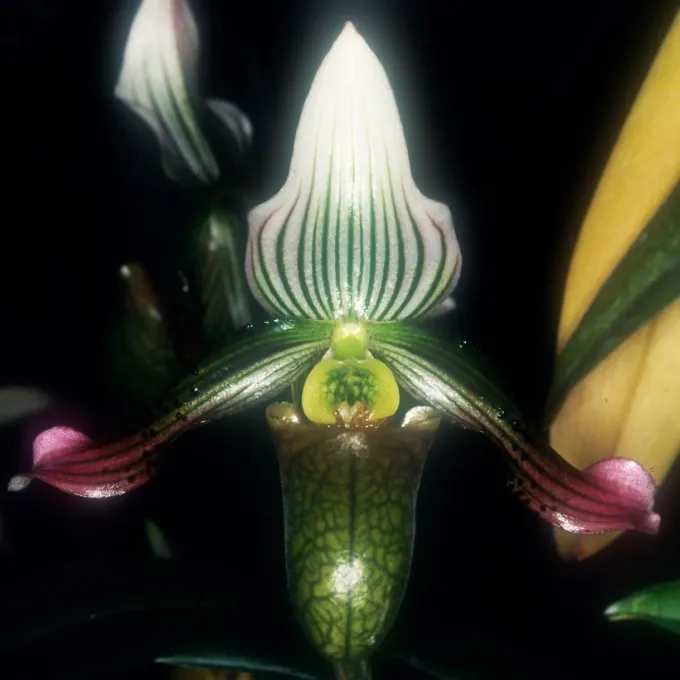
Description
Growing requirements
Paphiopedilum schoseri is a fascinating perennial orchid belonging to the Orchidaceae family. Native to the Moluccas in Indonesia, this species is typically found in humid tropical forests, often growing as a lithophyte or epiphyte in limestone-rich environments.
The cultivation of this plant requires a stable temperature range, ideally between 18°C and 24°C. A nocturnal temperature drop of several degrees is essential to simulate the natural mountain climate of its habitat and encourage healthy growth cycles.
Light intensity should be kept moderate and diffused. Exposure to intense direct sunlight can lead to leaf scorching and tissue damage; therefore, shading is recommended during high-intensity hours. A standard intensity of 15,000 to 20,000 lux is typically optimal.
The substrate must be well-draining but moisture-retentive, typically composed of conifer bark, charcoal, and sphagnum moss. Incorporating calcium-rich elements is vital for P. schoseri, as it reflects the natural limestone substrates found in its native geographical range.
Watering practices should focus on consistency. Because the plant lacks significant water-storage organs like pseudobulbs, the medium should be kept evenly moist but never saturated. High-quality, low-mineral water is preferred to maintain root health and prevent salt buildup.
Yield
In a horticultural context, the yield refers to the production of high-quality blooms. A healthy specimen will produce sturdy stems bearing flowers that showcase the unique structure characteristic of the Paphiopedilum genus, highly valued in the global floral trade.
Main diseases and pests
Common pests include spider mites and mealybugs, which thrive in low-humidity indoor environments. Effective management involves maintaining adequate humidity levels of 60% or more and using targeted insecticides when necessary to protect the foliage.
Pathological threats include various forms of fungal and bacterial rot, often resulting from stagnant water or poor air circulation. Sanitation of the growing area and the use of preventative fungicides are standard practices to ensure the long-term viability of the plant.