
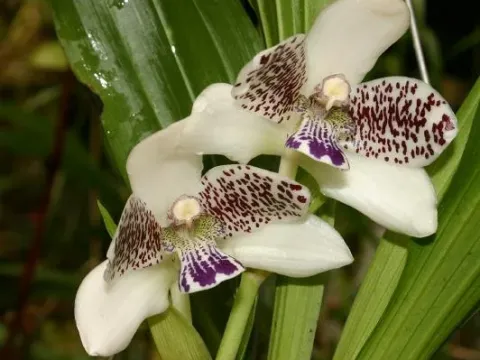
Pabstia
Pabstia
Pabstia is a genus of epiphytic plants belonging to the Orchidaceae family. These plants are native to the tropical forests of South America, primarily found in Brazil. In their natural habitat, they lead an epiphytic lifestyle, attaching themselves to tree trunks and branches in conditions of high humidity and diffused light.
What the section contains


Pabstia
This culture is characterized by the presence of prominent pseudobulbs, which serve as reservoirs for storing moisture and nutrients. The leaves of Pabstia are typically lanceolate, leathery, and quite dense. The root system is well-developed and adapted to absorbing atmospheric moisture and nutrients from tree bark.
Successful cultivation of Pabstia requires creating a microclimate as close to tropical as possible. The optimal temperature range varies from 18 to 25 degrees Celsius, and plants require a significant difference between night and day temperatures to stimulate flowering. An essential condition is ensuring high relative humidity, which should not fall below 60–70%.
The substrate for Pabstia must have excellent aeration and drainage properties. Growers often use a mix of conifer bark, sphagnum moss, charcoal, and perlite. Since this plant does not tolerate stagnant water at the roots, using a high-quality drainage layer at the bottom of the pot is a mandatory requirement of cultivation.
Lighting for this culture should be moderately bright but strictly diffused. Direct sunlight can cause burns on the delicate leaves of Pabstia, so it is recommended to shade the plants during midday hours. During winter, if daylight hours are insufficient, the use of grow lights is acceptable to prevent the stretching of shoots.
The main threats to Pabstia are various types of rot that occur when watering regimes are disrupted or air circulation is poor. Overwatering the substrate inevitably leads to the development of fungal infections that attack the root collar and pseudobulbs of the plant.
Among the typical pests attacking this orchid are scale insects and spider mites. Scale insects settle on the underside of leaves and in the leaf axils, sucking out cell sap and weakening the plant's immune system. Spider mites actively multiply in overly dry air, covering leaves with thin webs.
To prevent infestations, it is necessary to regularly inspect the plants and monitor the cleanliness of their growing area. If the first signs of pests appear, it is recommended to use insecticides or acaricides approved for use on indoor plants.
A serious danger is also posed by viral mosaic, which is virtually untreatable. Affected specimens should be immediately isolated from the rest of the collection to prevent the spread of the disease through pruning tools or insect vectors.
An important aspect of plant protection is the use of sterile tools when dividing the plant or pruning dry parts. Regular sanitary treatment of the substrate and maintaining an optimal level of ventilation significantly reduce the risks of infectious diseases.