
Paphiopedilum sangii
Paphiopedilum sangii
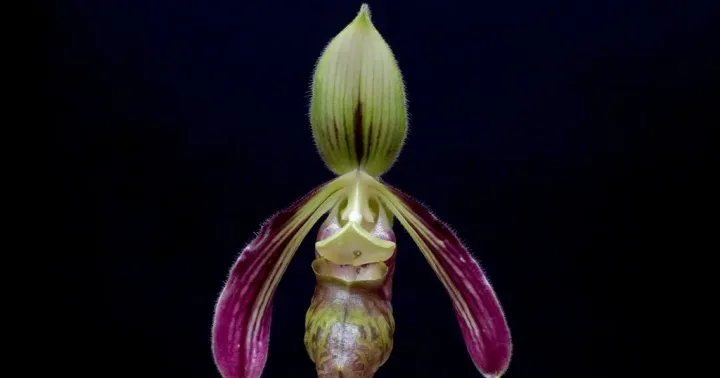
Description
Growing requirements
Paphiopedilum sangii is a distinctive member of the Orchidaceae family, native to the tropical rainforests of Sulawesi, Indonesia. This species is highly valued for its unique morphology and is classified as a collector's orchid.
Optimal growth requires a temperature range of 18°C to 24°C, with a necessary diurnal temperature fluctuation to stimulate blooming. Stable conditions are crucial to mirror the natural microclimate of its origin.
The plant thrives in diffused, bright light, avoiding direct sunlight which causes severe tissue damage. Maintaining light levels around 10,000 to 15,000 lux is generally considered ideal for vegetative development.
A well-aerated substrate, typically consisting of pine bark, perlite, and charcoal, is essential for root health. Watering should be consistent, keeping the media slightly moist but never waterlogged to prevent root suffocation.
High humidity levels (60–75%) are necessary for successful cultivation. Implementing humidity trays or using automated fogging systems helps maintain the transpiration rates required for healthy foliage development.
Main diseases and pests
The primary concern for Paphiopedilum sangii is the development of root and crown rot, which often occurs due to overwatering or inadequate airflow around the potting medium.
Spider mites represent a significant pest threat, especially in drier environments, as they feed on leaf sap and weaken the plant's structural integrity.
Mealybugs are known to infest the leaf axils, necessitating routine inspections to prevent population outbreaks that can impede the plant's growth cycle.
Preventive maintenance includes cleaning foliage and utilizing systemic treatments at the first sign of infestations or abnormal leaf spotting.
Poor ventilation acts as a catalyst for fungal pathogens, making effective air circulation a vital component of integrated pest and disease management for this species.