
Paphiopedilum wenshanense
Paphiopedilum wenshanense
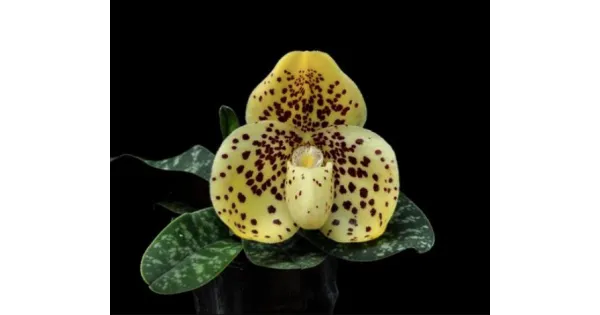
Description
Growing requirements
Paphiopedilum wenshanense is a highly distinctive lithophytic orchid belonging to the Orchidaceae family. It is native to the Wenshan region in Yunnan, China, where it grows specifically on limestone cliffs, requiring unique conditions to thrive in cultivation.
This species flourishes in moderate temperatures with significant diurnal fluctuations. Daytime temperatures should ideally range between 22 and 26 degrees Celsius, while a drop to 15 degrees at night is essential for the plant's metabolic health and bloom induction.
The potting medium must simulate the natural limestone habitat. A mix comprising coarse pine bark, perlite, and a substantial portion of limestone chips or crushed dolomite is necessary to maintain the required alkaline pH levels for root growth.
Light intensity for this species should be moderate, typically between 12,000 and 16,000 lux. Exposure to direct sunlight must be strictly avoided, as the leaves are highly susceptible to photo-inhibition and scorching, leading to irreversible tissue damage.
Water quality is critical for this orchid. It is sensitive to salt accumulation, so watering with rainwater or reverse osmosis water is recommended. The substrate should remain moist but never waterlogged to allow oxygen exchange at the root zone.
Main diseases and pests
Fungal infections are the most frequent health issues in Paphiopedilum cultivation, primarily caused by improper airflow and substrate compaction, which prevents roots from drying out between watering sessions.
Common pests such as mealybugs and spider mites pose a constant threat, especially in indoor environments where humidity may fluctuate and air circulation is often inadequate for rapid evaporation.
Root rot is a specific concern for lithophytic species, often occurring when the drainage properties of the potting medium degrade over time due to the breakdown of organic components.
Preventative measures include maintaining high hygiene standards in the growing area, using sterilized pots, and ensuring all tools used for maintenance are disinfected between each orchid.
If symptoms of crown rot appear, it is essential to isolate the affected plant immediately and treat the area with a fungicide to prevent the spread to other specimens in the collection.