
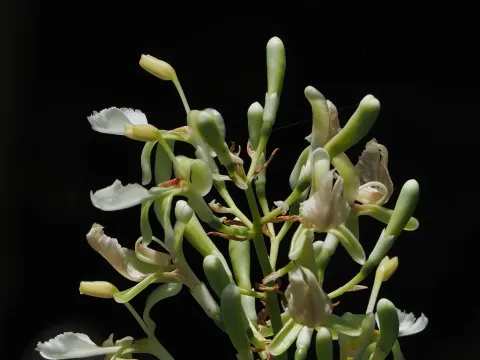
Alpinia
Alpinia
Alpinia is a genus of perennial herbaceous plants belonging to the Zingiberaceae (ginger) family. These plants are characterized by robust, rhizomatous root systems and thick, leafy stalks that can reach significant heights in suitable tropical environments.
What the section contains
 Alpinia aquatica
Alpinia aquatica
Alpinia aquatica
 Alpinia arctiflora
Alpinia assimilis
Alpinia assimilis
Alpinia arctiflora
Alpinia arctiflora
Alpinia assimilis
Alpinia assimilis
 Alpinia caerulea
Alpinia caerulea
Alpinia caerulea
 Alpinia calcarata
Alpinia calcarata
Alpinia calcarata
 Alpinia conchigera
Alpinia conchigera
Alpinia conchigera
 Alpinia formosana
Alpinia formosana
Alpinia formosana
 Alpinia galanga
Alpinia galanga
Alpinia galanga
 Alpinia intermedia
Alpinia jianganfeng
Alpinia jianganfeng
Alpinia intermedia
Alpinia intermedia
Alpinia jianganfeng
Alpinia jianganfeng
 Alpinia kwangsiensis
Alpinia kwangsiensis
Alpinia kwangsiensis
 Alpinia latilabris
Alpinia latilabris
Alpinia latilabris
 Alpinia luteocarpa
Alpinia luteocarpa
Alpinia luteocarpa
 Alpinia maclurei
Alpinia maclurei
Alpinia maclurei
 Alpinia malaccensis
Alpinia malaccensis
Alpinia malaccensis
 Alpinia mutica
Alpinia mutica
Alpinia mutica
 Alpinia nigra
Alpinia nigra
Alpinia nigra
 Alpinia nobilis
Alpinia nobilis
Alpinia nobilis
 Alpinia nutans
Alpinia nutans
Alpinia nutans
 Alpinia oblongifolia
Alpinia oblongifolia
Alpinia oblongifolia
 Alpinia oxyphylla
Alpinia petiolata
Alpinia petiolata
Alpinia oxyphylla
Alpinia oxyphylla
Alpinia petiolata
Alpinia petiolata
 Alpinia pumila
Alpinia pumila
Alpinia pumila
 Alpinia roxburghii
Alpinia roxburghii
Alpinia roxburghii
 Alpinia stachyodes
Alpinia stachyodes
Alpinia stachyodes
 Alpinia vittata
Alpinia vittata
Alpinia vittata
 Chinese alpinia
Alpinia chinensis
Chinese alpinia
Alpinia chinensis
 Japanese alpinia
Alpinia japonica
Japanese alpinia
Alpinia japonica
 Javanese Alpinia
Alpinia javanica
Javanese Alpinia
Alpinia javanica
Alpinia
The origin of Alpinia is traced back to tropical and subtropical regions of Asia and the Pacific. Cultivation of these plants requires specific environmental conditions similar to their natural habitat, focusing primarily on high humidity levels and constant temperatures throughout the growing season.
Regarding soil requirements, Alpinia performs best in rich, fertile, and well-drained soil with a slightly acidic to neutral pH. Proper soil management, including the addition of organic compost, is crucial for maintaining the vigor of the plant and ensuring the quality of the harvested rhizomes.
Climatic requirements involve protection from extreme heat and direct sun exposure, as well as strict avoidance of freezing temperatures. The crop thrives in environments where temperatures remain between 22°C and 30°C, and rainfall or irrigation is evenly distributed throughout the year.
Agronomic practices focus on periodic weeding and soil loosening to improve oxygen levels for the developing rhizomes. Propagation is typically achieved through division of the rhizome clusters, ensuring that each segment has healthy growing buds to establish a productive new plant stand.
The harvesting of Alpinia is generally performed once the foliage begins to senesce, indicating that the rhizomes have reached maturity. Farmers use specialized hand tools to lift the rhizomes from the soil, followed by cleaning and processing to meet the standards of the spice and herbal medicine markets.
The most common threats to Alpinia cultivation include fungal rot caused by poor soil drainage and stagnant water. Common pests such as spider mites and scale insects can also impact yield; therefore, integrated pest management practices are recommended to maintain plant health and prevent severe infestations.