
Alpinia calcarata
Alpinia calcarata
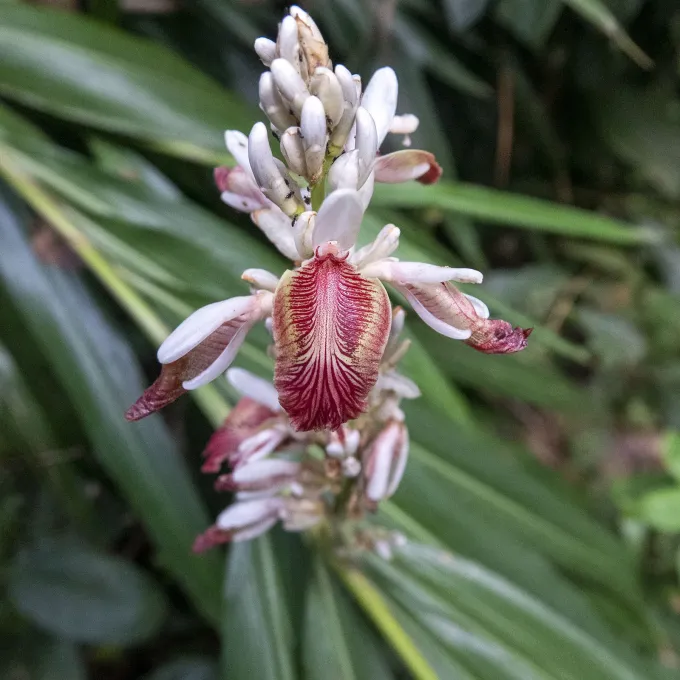
Description
Sowing dates
Alpinia calcarata, commonly known as the snap ginger or lesser galangal, is a rhizomatous perennial belonging to the Zingiberaceae family, native to tropical regions of Asia.
Propagation is primarily achieved through rhizome division. The best time for planting is during the early spring when temperatures remain consistently above 20°C to encourage root development.
When planting, ensure the rhizomes are placed about 5-10 cm deep in a nutrient-rich, well-draining soil mix that allows for sufficient aeration around the root zone.
Spacing is critical; leave at least 40-50 cm between individual plants to accommodate the rapid lateral spread of the root system as the plant matures during the season.
If starting from seeds, ensure they are fresh, as viability decreases rapidly after harvest. Sow seeds in a moist, warm substrate and maintain high humidity until germination occurs.
Growing requirements
This species thrives in tropical climates. It requires full sunlight to partial shade; however, direct afternoon sun can cause leaf scorch, so filtered light is generally preferred.
Temperature management is crucial. Alpinia calcarata prefers a range between 22°C and 30°C. It is highly sensitive to cold and will suffer damage or death if exposed to frost.
The soil should be rich in organic matter, such as compost or peat, and must have excellent drainage. The plant is prone to root rot if kept in waterlogged conditions.
High humidity is essential for optimal leaf growth. In dry environments, misting the plant or using a humidifier is necessary to maintain moisture levels above 60%.
Fertilization should be applied regularly during the active growing season. A balanced liquid fertilizer or a slow-release granular organic mix works best for consistent growth.
Main diseases and pests
The primary pests affecting Alpinia calcarata include spider mites and mealybugs, which tend to flourish when the plant is kept in low humidity environments.
Fungal pathogens like Fusarium are a common threat, usually resulting from poor drainage or overwatering, which leads to the decay of the rhizomatous root system.
To control pest populations, use insecticidal soaps or neem oil, ensuring thorough coverage of both the upper and lower leaf surfaces during the early stages of infestation.
Preventative measures involve maintaining proper air circulation and strictly avoiding over-irrigation, especially during the cooler periods of the growing cycle.
- Monitor growth points for signs of yellowing or curling leaves.
- Remove infected foliage immediately to prevent further disease spread.
- Ensure that the drainage system of the growing container is clear of debris.
Harvesting
Harvesting for medicinal or culinary use is usually performed two to three years after the initial planting, allowing the rhizomes to develop fully and concentrate active compounds.
To harvest, carefully excavate the soil around the base of the plant to expose the rhizomes, then detach the required sections while leaving the main clump intact for regrowth.
After extraction, the rhizomes should be thoroughly washed and scrubbed to remove all soil particles, followed by the removal of the fibrous outer skin if necessary.
Drying the harvested rhizomes is typically done in a controlled environment, keeping temperatures between 35°C and 45°C to preserve the volatile oils and aromatic profile.
Properly dried rhizomes can be stored for extended periods in airtight containers, which effectively prevents the loss of fragrance and maintains the plant's quality for consumption.