
Alpinia petiolata
Alpinia petiolata
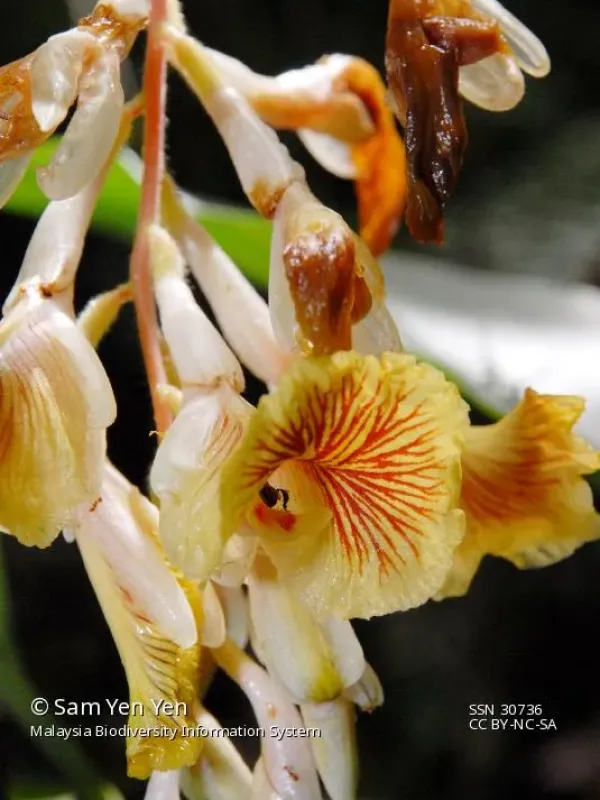
Description
Growing requirements
Alpinia petiolata is a notable member of the Zingiberaceae family, indigenous to the tropical rainforests of Southeast Asia. It is valued for its unique foliage and distinct growth habit, requiring tropical conditions to thrive.
To cultivate this species successfully, one must provide a warm environment with temperatures consistently staying between 22 and 28 degrees Celsius throughout the growing season.
The plant demands rich, well-draining soil that mimics forest floor conditions, typically high in organic matter and slightly acidic to neutral in pH levels.
High humidity is essential for the health of Alpinia petiolata. Regular misting or the use of humidifiers is often required if the plant is kept in an indoor environment or greenhouse.
Cultural practices include consistent watering without waterlogging, as the roots are sensitive to anaerobic conditions caused by stagnant moisture in the substrate.
Main diseases and pests
Spider mites are a common threat, particularly in environments with low humidity, where they colonize the undersides of the leaves and cause stunted growth.
Root rot, induced by fungal pathogens, is a significant risk if the soil remains excessively damp or if the drainage system is inadequate for the plant's needs.
Scale insects may also affect the stems and leaves, extracting plant sap and weakening the overall vitality of the Alpinia specimens over time.
Preventative measures involve maintaining a clean growing area, removing dead plant material promptly, and ensuring good air circulation around the foliage.
Should pests or diseases be detected, integrated pest management strategies, such as using horticultural soaps or targeted fungicides, should be implemented immediately.