

Description
Symptoms
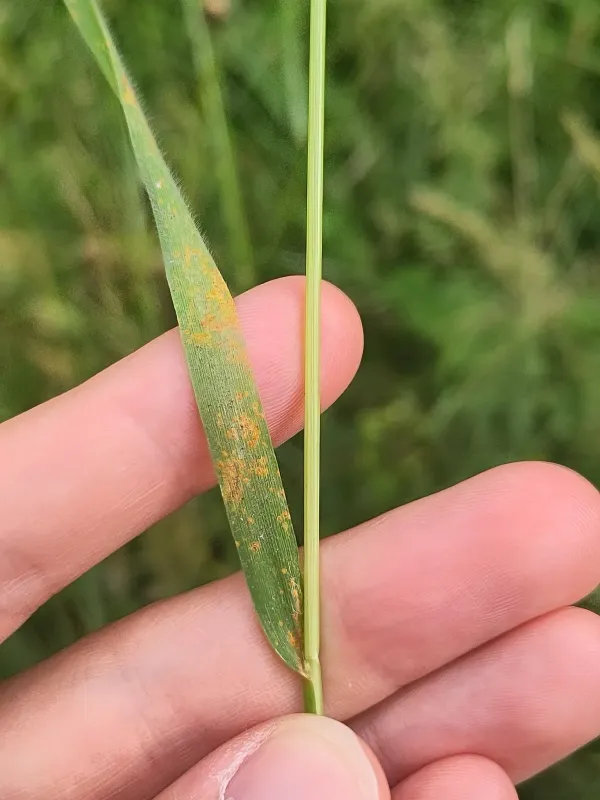
The most characteristic symptom of barley leaf rust is the presence of small, round to oval, orange-brown uredinia scattered across the leaf surface. These pustules typically occur on the upper side of the leaves.
Unlike other rust species that form orderly rows, the pustules of Puccinia hordei are usually distributed randomly. As the disease progresses, the pustules break through the leaf epidermis, releasing a large volume of powdery spores.
Heavily infected leaves turn chlorotic (yellow) and eventually wither, leading to premature senescence. In severe cases, pustules can also be observed on leaf sheaths and occasionally on the glumes of the barley head.
As the plant approaches maturity, the orange uredinia may be replaced by dark brown to black telia. These structures represent the sexual or survival phase of the fungus and remain covered by the host epidermis.
Field-level scouting reveals patches of discolored or stunted plants. When a heavily infested leaf is brushed against clothes or skin, a fine orange dust consisting of thousands of microscopic spores is left behind.
Pathogen
Barley leaf rust is caused by the fungus Puccinia hordei. It is an obligate biotroph, meaning it relies on living host tissue to complete its life cycle and obtain essential nutrients for development.
The fungus is known for its high genetic diversity, consisting of numerous physiological races. This variability allows the pathogen to adapt to different host genotypes, frequently overcoming the resistance genes introduced by plant breeders.
The disease cycle involves the production of urediniospores, which are responsible for the rapid spread of the disease within the field. These spores can be carried long distances by wind, initiating new infection foci far from the original source.
In addition to the asexual cycle, the fungus can produce teliospores, which are survival structures. These allow the pathogen to persist on crop debris or, in some cases, infect alternative hosts such as Ornithogalum species.
The mycelium of the pathogen colonizes the leaf tissues, forming specialized structures called haustoria to extract nutrients from the host cells. This internal colonization is what eventually leads to the visible symptoms on the surface of the leaves.
Conditions for development
The development of barley leaf rust is highly dependent on environmental conditions. Mild temperatures ranging from 15°C to 22°C combined with high humidity or leaf wetness are optimal for spore germination and infection.
Dew and light rain provide the necessary moisture for urediniospores to germinate and penetrate the host tissue. Under such favorable conditions, the time from infection to new spore production can be as short as one week.
Cloudy weather and frequent mist promote disease outbreaks by maintaining leaf wetness for extended periods. This environment allows the fungus to multiply rapidly and cover large areas of the crop canopy.
Cultural practices also influence disease severity. Dense planting and high nitrogen fertilization rates create a humid, warm microclimate within the crop canopy, which facilitates the rapid spread of the pathogen.
Early-season infections are often linked to the presence of volunteer barley or alternative hosts nearby. These act as "green bridges," allowing the fungus to survive and spread to newly emerged crops.
Why it matters
Barley leaf rust causes significant economic damage by disrupting the plant's physiological functions. The loss of green leaf area directly reduces the photosynthetic capacity of the barley plant.
As the plant diverts energy to combat the pathogen, the filling of the grain is severely impacted. This results in shriveled kernels, lower test weight, and reduced overall grain yield, often by 20% to 50% in epidemic years.
In addition to yield loss, the quality of the grain is negatively affected. This is particularly critical for malting barley, as the disease reduces starch content and alters the protein profile of the grain.
The stress caused by the infection makes plants more susceptible to lodging and secondary pathogens. A weakened crop is also less capable of recovering from other environmental stresses, such as heat or moisture deficits.
Producers face not only the direct loss of income but also increased production costs due to the need for multiple fungicide applications to protect the yield during the critical growth stages.
Protection
Effective management of barley leaf rust requires an integrated approach. Utilizing resistant or tolerant cultivars is the most sustainable and cost-effective method of control for commercial producers.
Cultural practices such as destroying volunteer barley and managing weeds help reduce the initial inoculum load. Crop rotation is also recommended to prevent the buildup of the fungus in the soil or local environment.
Balanced fertilization, particularly adequate potassium and phosphorus, can improve plant health and tolerance. Excessive nitrogen should be avoided as it stimulates lush, succulent growth that is highly susceptible to infection.
Chemical control with fungicides is essential when the disease reaches economic thresholds. Systemic products containing triazoles or strobilurins are widely used to provide both curative and preventative protection.
Timely application of fungicides is crucial, especially during the flag leaf emergence and grain-filling stages. Regular field scouting is necessary to determine the optimal timing for intervention and ensure maximum efficacy.
Content graph
Connections · Barley leaf rust
Most often together:
Marketplace
Products · 213


Community
Discussion
No discussions yet — be the first.