

Reference · Diseases
Plant nematode diseases
Plant nematode diseases are caused by microscopic roundworms, known as phytoparasitic nematodes, which attack various parts of plants. These pathogens insert their stylets into plant tissues to withdraw nutrients, causing mechanical damage and introducing toxic enzymes that disrupt normal plant physiology and growth.
Main sections
31
sections
What the section contains
 American dagger nematode
Xiphinema americanum
American dagger nematode
Xiphinema americanum
 Aphelenchoid nematode
Aphelenchoides parietinus
Burrowing nematode
Radopholus spp.
Cankers and galls (plant)
2 items
Aphelenchoid nematode
Aphelenchoides parietinus
Burrowing nematode
Radopholus spp.
Cankers and galls (plant)
2 items
 Chrysanthemum nematode
Aphelenchoides ritzemabosi
Chrysanthemum nematode
Aphelenchoides ritzemabosi
 Citrus nematode
Tylenchulus semipenetrans
Citrus nematode
Tylenchulus semipenetrans
 Columbia lance nematode
Hoplolaimus columbus
Columbia lance nematode
Hoplolaimus columbus
 False root-knot nematode
Nacobbus aberrans
Foliar nematode
Aphelenchoides spp.
False root-knot nematode
Nacobbus aberrans
Foliar nematode
Aphelenchoides spp.
 Hoplolaimus
Lance nematode
Hoplolaimus spp.
Hoplolaimus
Hoplolaimus
Lance nematode
Hoplolaimus spp.
 Lesion nematodes
Lesion nematodes
Lesion nematodes
 Longidorus
Longidorus
Longidorus
 Merlinius
Needle nematode
Longidorus spp.
Merlinius
Merlinius
Needle nematode
Longidorus spp.
 Paratylenchus disease
Paratylenchus spp.
Peanut nematode
Aphelenchoides arachidis
Paratylenchus disease
Paratylenchus spp.
Peanut nematode
Aphelenchoides arachidis
 Peanut stem nematode
Tylenchorhynchus spp.
Peanut stem nematode
Tylenchorhynchus spp.
 Radopholus disease
Radopholus
Radopholus disease
Radopholus
 Red ring disease
Bursaphelenchus cocophilus
Red ring disease
Bursaphelenchus cocophilus
 Reniform nematode
Rotylenchulus reniformis
Reniform nematode
Rotylenchulus spp.
Reniform nematode
Rotylenchulus reniformis
Reniform nematode
Rotylenchulus spp.
 Rice white tip disease
Aphelenchoides besseyi
Rice white tip disease
Aphelenchoides besseyi
 Ring nematode
Criconemella xenoplax
Ring nematodes
Criconema
Rots (plant)
1 item
Ring nematode
Criconemella xenoplax
Ring nematodes
Criconema
Rots (plant)
1 item
 Spiral nematode
Helicotylenchus
Spiral nematode
Helicotylenchus spp.
Spiral nematode
Helicotylenchus dihystera
Spiral nematode
Helicotylenchus
Spiral nematode
Helicotylenchus spp.
Spiral nematode
Helicotylenchus dihystera
 Sting nematode
Belonolaimus spp.
Xiphinema
Xiphinema spp.
Sting nematode
Belonolaimus spp.
Xiphinema
Xiphinema spp.
Marketplace
Products in this section · 7




Plant nematode diseases
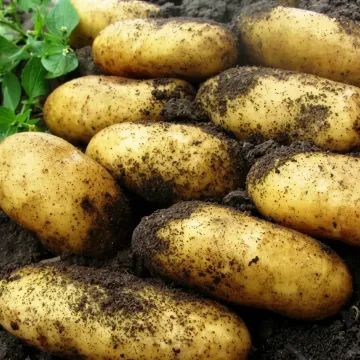
These pests affect a vast array of crops, including potatoes, tomatoes, strawberries, and ornamental plants. The impact is significant because nematodes can live in the soil for extended periods, even in the absence of a host, by forming dormant cysts or surviving in plant debris until favorable conditions return.
Symptoms often manifest as stunted growth, chlorosis, wilting during hot periods, and a lack of response to fertilizers. Root-knot nematodes are notorious for inducing the formation of characteristic galls on roots, which block the movement of water and minerals, essentially starving the plant from below.
Development and spread are primarily driven by soil moisture levels, temperature ranges between 20°C and 30°C, and soil type. Nematodes are easily spread via contaminated agricultural machinery, irrigation water, infected transplants, and even infested garden tools, making them difficult to eradicate once a field is colonized.
Effective management requires an integrated approach to lower nematode populations to non-damaging levels:
- Implement strict crop rotation schemes with non-host crops to starve out the parasite.
- Utilize solarization or biofumigation techniques to reduce soil-borne pathogen counts.
- Use certified nematode-free seeds and nursery stock to prevent new infestations.
- Apply biological control agents, such as beneficial fungi, and use resistant cultivars to minimize the necessity for chemical intervention.