
Description
Symptoms
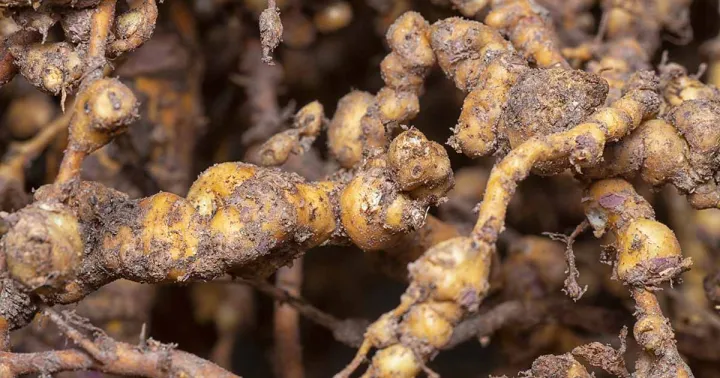
The primary symptom of false root-knot nematode infestation is the formation of specific galls on the root system. Unlike true root-knot nematodes, these galls often have an irregular, elongated shape and may appear as chains along the root.
The aerial parts of affected plants show symptoms of stunted growth, typical of root malnutrition. Plants lag in development, leaves may turn yellow, curl, or prematurely wilt during hot hours even if they are well-watered.
In cases of heavy infestation, side roots die off en masse, leading to the deformation of sugar beet taproots. Such roots lose their commercial value, and the total weight of the crop significantly decreases due to impaired nutrient uptake.
In the field, infested areas manifest as clusters of stunted, chlorotic plants that stand out against the healthy crop. These patches can gradually expand, affecting a larger area of the field if crop rotation is not strictly followed.
Accurate diagnosis requires laboratory analysis of the root system and soil to identify the larvae and females under a microscope. Visual symptoms are often confused with other nematode species, necessitating professional confirmation.
Pathogen
The pathogen is Nacobbus aberrans, an obligate plant parasite belonging to the group of migratory endoparasites. This microscopic worm has a complex life cycle involving development in both soil and plant root tissues.
The second-stage larvae are the ones causing damage, as they actively penetrate the host plant roots through root hairs. Once inside, the parasite migrates to the vascular system, inducing the formation of giant cells and pathological tissue outgrowths.
Females become sedentary after embedding themselves in the root tissue, laying eggs in a gelatinous matrix inside or on the surface of the gall. This ensures high population fecundity and rapid accumulation of infectious material in the soil.
Beyond direct tissue damage, the nematode facilitates the entry of secondary infections, such as fungal and bacterial rots. This significantly complicates treatment and accelerates the death of the infected plant.
The nematode population can survive in the soil for several years, even in the absence of susceptible host crops, due to its high ecological plasticity and ability to endure various soil types.
Conditions for development
The development of Nacobbus aberrans is favored by sandy and light loamy soils, which allow nematodes to move more easily within the thin water film. High aeration in these soils also contributes to the parasite's intensive metabolism.
The optimal temperature for active reproduction and larval migration ranges from +20 to +25 degrees Celsius. Under moderately moist soil conditions, the parasite can complete several generations within a single growing season.
The spread of the nematode over long distances occurs primarily through contaminated planting material, roots, and seedlings. Soil particles attached to agricultural tools and heavy machinery are also vital factors in the transport of the infestation.
Intensive cultivation of susceptible crops in the same area without crop rotation creates ideal conditions for a surge in pathogen numbers. The more frequently host crops are planted, the higher the risk of catastrophic infestation.
Irrigation systems using water from open reservoirs can spread eggs and larvae to new territories, making the water source a critical factor for the phytosanitary security of an agricultural holding.
Why it matters
The false root-knot nematode affects a wide range of agricultural crops. It is particularly damaging to sugar beets, table beets, peppers, tomatoes, potatoes, and several other Solanaceae and Amaranthaceae species.
The harm manifests in substantial yield losses, which can reach 50–80% in heavily infested areas. Product quality declines so severely that it becomes unsuitable for market sales or long-term storage.
Damaged beetroots develop deformed shapes, numerous galls, and deep cracks, making them vulnerable to soil-borne pathogens. Storing such roots carries a high risk of rot and total batch loss.
Economic damage includes not only direct crop losses but also the costs associated with quarantine measures and usage restrictions on infested land. Detecting this nematode in a field can lead to bans on produce exports.
Disrupted metabolic processes in the root system lead to lower sugar content in beets and altered chemical profiles in peppers, negatively impacting the taste and nutritional value of the harvested yield.
Protection
The primary control method is strict adherence to crop rotation, incorporating antagonistic crops such as cereals or crucifers, which do not support the development of Nacobbus aberrans populations.
Using healthy, certified planting material and seedlings is a critical requirement to prevent initial field colonization. All purchased plants must undergo phytosanitary inspection.
Mechanical cleaning of agricultural tools and machinery after working in infested areas prevents the transfer of larvae and eggs to clean fields. It is also important to disinfect wastewater and irrigation systems.
Chemical control involves the use of nematicides, though their use is often restricted by environmental regulations and high costs. It is preferable to apply treatments specifically to localized infestation spots to minimize soil impact.
Agrotechnical measures include deep autumn plowing, which promotes freezing of the topsoil and kills a portion of the nematode population. Applying organic fertilizers is also recommended to improve the natural resistance of the soil against pathogens.
Pathogens and affected parts
Affects crops · 2
Discussion
No discussions yet — be the first.