
Description
Symptoms
Initial symptoms include stunted plant growth, chlorosis, and wilting, often appearing in patches within a field. Affected plants often fail to respond to irrigation or fertilizers.
The root system shows clear signs of distress. Typical symptoms include browning of root tips, shortened and swollen lateral roots, and a general lack of a healthy, fine root structure.
Plants often exhibit symptoms that mimic nutrient deficiencies, as the damaged roots are unable to absorb essential minerals, even when they are present in the soil.
In severe cases, the plants can be easily pulled from the soil due to the near-total loss of the smaller, anchoring root system.
Diagnostic confirmation usually requires soil and root tissue assays performed by a specialized laboratory to distinguish sting nematode damage from other root pathogens.
Pathogen
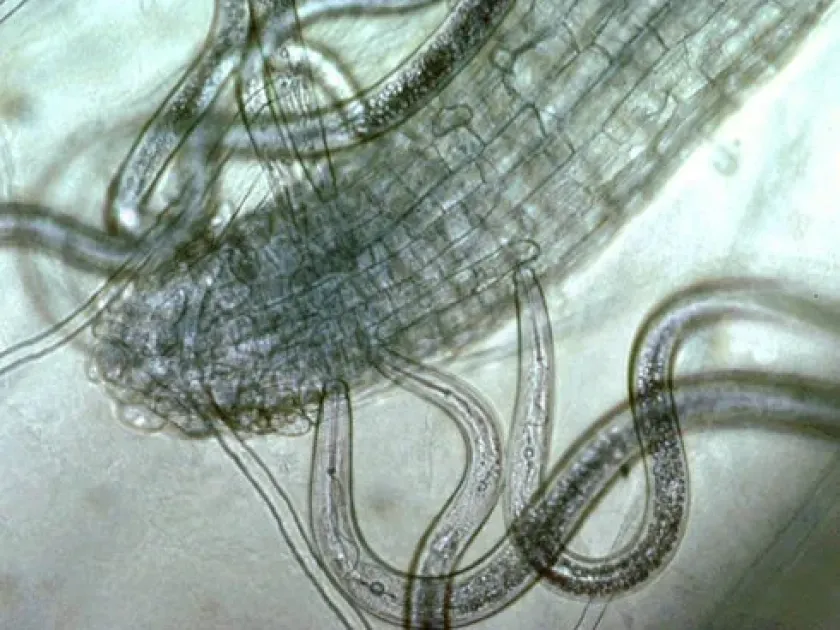
The sting nematode, Belonolaimus spp., is a highly destructive ectoparasitic nematode. It is a microscopic roundworm equipped with an elongated, needle-like stylet used to pierce plant root tissues.
Unlike endoparasites, this nematode remains outside the root system, feeding on the root tips and causing severe damage to the plant's ability to take up water and nutrients from the soil.
The nematode's life cycle is strictly dependent on the presence of host plant roots. In the absence of suitable hosts, the population density declines, though the nematode can survive in moist soils for a period.
The host range is broad and includes economically significant crops: onions, garlic, celery, peppers, citrus, Gerbera jamesonii, cotton, and sweet potatoes.
The biology of this parasite is characterized by its high mobility in soil, allowing it to move from one root to another, causing widespread damage throughout the crop.
Conditions for development
Sting nematodes thrive in light, sandy-textured soils. These soil types facilitate the movement of the nematode, allowing it to locate and attack host roots with high efficiency.
Ideal conditions for development include soil temperatures between 20 and 30 degrees Celsius and adequate moisture levels, which support nematode activity and survival.
The pest is often introduced to new fields through contaminated planting materials, such as bulbs or seedlings, or through farm machinery that carries infested soil.
Continuous cropping of susceptible host plants in the same area leads to a buildup of population levels, making it harder to control in subsequent seasons.
Proper water management is essential; while moisture is necessary for the nematode, poor drainage or excessive standing water can influence the distribution patterns within the field.
Why it matters
The damage caused by Belonolaimus spp. is primarily due to the destruction of root tips, which halts root development and reduces the plant's growth potential significantly.
Root wounds created by the nematode provide an entry point for secondary pathogens, such as fungi and bacteria, leading to root rots and further decreasing the plant's health.
In crops like onions and garlic, the infestation leads to reduced bulb size, deformed shapes, and lower market value, making them unsuitable for long-term storage.
In cotton and other industrial crops, sting nematode damage results in poor stands and reduced yields, often necessitating replanting or intensive chemical intervention.
The economic impact involves both the direct loss of yield and the high costs associated with soil fumigation and specialized crop management practices.
Protection
The most effective strategy is the use of long-term crop rotation with non-host species, which reduces the population density in the soil over time.
Using clean, nematode-free planting stock is the primary defense against the initial introduction of the pest into previously uninfested fields.
- Application of soil fumigants or nematicides where permitted by regulation.
- Use of antagonistic cover crops that suppress nematode populations naturally.
- Sanitation of farm equipment to prevent the transport of infested soil between different fields.
- Providing optimal nutritional support to help plants cope with reduced root efficiency.
Integrated Pest Management (IPM) practices, including biological control agents and resistant cultivars where available, are recommended to maintain population levels below the economic threshold.
Pathogens and affected parts
Affects crops · 12
Discussion
No discussions yet — be the first.