
Description
Symptoms
Visual symptoms often resemble nutrient deficiencies or water stress, making early detection difficult. Affected trees exhibit a chlorotic appearance, with sparse, dull, and smaller-than-normal leaves.
The condition is frequently referred to as "slow decline." Infected trees show a significant reduction in annual shoot growth, thinning of the canopy, and a gradual decrease in total foliage density over several years.
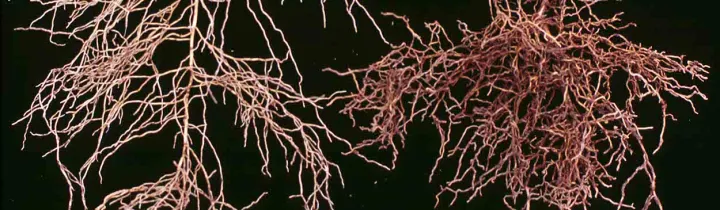
A specific diagnostic sign is the presence of soil particles clinging to the roots, held together by the nematode's gelatinous secretions. This gives the roots a dirty, gritty appearance when examined in the field.
At the microscopic level, the infestation causes necrosis of fine feeder roots. This destruction of the absorbing root system severely limits the plant's ability to uptake water and nutrients from the soil.
Confirmation of Tylenchulus semipenetrans requires laboratory soil and root analysis, as external symptoms are not unique to nematode damage and can be confounded by other soil-borne diseases.
Pathogen
The causative agent of the disease is the microscopic worm Tylenchulus semipenetrans, belonging to the Phylum Nematoda. This pest is a semi-endoparasite, where the anterior part of the female's body embeds into the root cortex, while the posterior remains exposed to the soil.
The life cycle of the citrus nematode is intrinsically linked to the root system of host plants. Larvae migrate through the soil moisture to find young roots, where they establish feeding sites that cause structural changes in root tissues.
Primary hosts include members of the Rutaceae family, such as lemons, oranges, mandarins, and grapefruits. Additionally, this nematode is known to parasitize the roots of grapevines and some olive varieties.
Dissemination occurs through infested nursery stock, movement of contaminated soil on machinery and tools, and by irrigation water moving across orchards. Females deposit eggs in a protective gelatinous matrix.
This gelatinous matrix protects eggs from desiccation and environmental stressors, allowing the nematode population to survive in the soil for extended periods even when a host crop is absent.
Conditions for development
The optimal temperature range for the development and reproduction of the citrus nematode is between 20°C and 30°C. Within this range, the life cycle is completed rapidly, leading to high population densities.
Soil texture significantly influences nematode movement. Sandy or light-textured, well-aerated soils facilitate faster migration of larvae toward healthy root systems, accelerating the spread of the infestation within an orchard.
Soil moisture is a critical factor. While nematodes are sensitive to extreme conditions, they thrive in moderate moisture levels. Waterlogging can suppress their activity by limiting oxygen availability in the root zone.
Continuous monoculture of citrus on the same land promotes the accumulation of high nematode populations. Over time, this exhaustion of the soil health makes it increasingly difficult to establish new, vigorous orchards.
Orchards maintained with improper irrigation or deficient fertilization programs show more severe decline symptoms because they lack the vigor to compensate for the continuous damage to their root systems.
Why it matters
The primary damage results from the mechanical and physiological disruption of the root system. The nematodes act as a significant drain on the plant's resources, diverting energy from growth and fruit production.
Reduced root function leads to poor vigor, making the trees more susceptible to secondary stressors such as heat waves, droughts, and frost, which can hasten the decline of otherwise healthy-looking trees.
Fruit yield is significantly impacted. The production of marketable fruit decreases, and the quality, size, and juice content of the citrus are often compromised, leading to major economic losses.
The damage to root cells creates entry points for soil-borne pathogens like Phytophthora and Fusarium. This synergistic interaction between nematodes and fungi often results in total tree death.
Long-term infestation poses a serious challenge, as rehabilitating soil or managing highly infested sites requires substantial investment in chemical treatments or the replacement of current trees with resistant rootstocks.
Protection
Using certified, nematode-free nursery stock is the most important preventive measure. Growers should ensure that all planting material is inspected and sourced from reputable, clean nurseries.
Prior to replanting in previously infested sites, soil fumigation is recommended to reduce the nematode population below the economic threshold. This provides a clean start for the new crop.
Modern irrigation systems allow for the application of nematicides via fertigation, directly targeting the root zone during the peak periods of nematode activity to suppress population growth.
- Regular soil sampling and nematode counting to monitor population trends.
- Strict sanitation of farm tools and machinery to prevent cross-contamination between blocks.
- Selection of resistant or tolerant rootstocks developed through breeding programs.
- Enhancing soil organic matter to promote beneficial microbes that may compete with nematodes.
Integrated pest management (IPM) focusing on good agronomic practices—such as balanced nutrition and precise water management—can help trees better tolerate low to moderate nematode levels.
Pathogens and affected parts
Affects crops · 2
Discussion
No discussions yet — be the first.