
Description
Symptoms
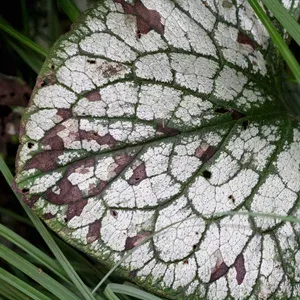
Symptoms of the infestation often appear on peanut pods. The shell may exhibit characteristic dark spots or necrotic zones resulting from nematode feeding.
Infested seeds often lose their germination capacity or produce weakened seedlings that lag behind healthy plants in growth and development during the first weeks.
Externally, the vegetative parts of affected plants may appear stunted, with chlorosis of the leaves and a general delay in the development of the root system.
Infestation often manifests as pod deformation and uneven ripening, which significantly reduces the commercial quality of the harvest after collection.
Inside the seeds, under heavy infestation, clusters of nematodes in various developmental stages can be detected, requiring laboratory microscopy for accurate diagnosis.
Pathogen
The causative agent of this disease is the phytonematode Aphelenchoides arachidis. This is a microscopic worm that leads an endoparasitic lifestyle, infecting the reproductive and vegetative organs of the plant.
The disease is classified as a nematode infestation. The parasite localizes within the tissues of the peanut shells (pods) and seeds, which complicates visual diagnosis during early vegetative stages.
The biology of this pest is characterized by its ability to survive in a dormant state inside seeds and plant debris, making seed material the primary vector for spreading the infection.
The nematode's life cycle lacks complex intermediate hosts, allowing the species to rapidly accumulate in the soil when peanuts are grown continuously in the same field.
This nematode belongs to a group of mobile forms capable of active migration under conditions of sufficient soil moisture to seek out new feeding sites.
Conditions for development
Conditions favorable for nematode reproduction include high soil moisture and moderate temperatures, typical of the peanut growing season.
The spread of the parasite across the field occurs primarily through infested seed material, as well as the movement of contaminated soil by agricultural machinery.
Light sandy soils provide an optimal environment for the life activities of Aphelenchoides arachidis, facilitating nematode movement within the soil solution.
Failure to rotate crops and growing peanuts in the same field for several consecutive years creates a persistent infection hotspot that is extremely difficult to eradicate.
Soil temperatures above 20-25 degrees Celsius activate the nematode metabolic processes, accelerating their life cycle and leading to mass infestation of the crop.
Why it matters
The damage caused by the peanut nematode consists primarily of a significant reduction in the mass and quality of marketable pods, leading to direct economic losses for farmers.
Infested seeds become unsuitable for planting, as they transmit the infection to the next generation, resulting in sparse stands and reduced crop density.
The accumulation of nematode populations in the soil makes it impossible to obtain high-quality yields in infested areas without implementing costly agronomic measures.
Tissue damage caused by nematodes often opens the way for secondary bacterial and fungal infections, which accelerate the rotting of pods in the soil.
Indirect damage is manifested in the necessity for quarantine measures during product transportation if the presence of live individuals of this parasite is detected in a shipment.
Protection
The foundation of protection is the use of certified healthy seed material that has undergone phytosanitary testing for the presence of nematode infections.
Practicing proper crop rotation by including antagonist crops or excluding peanuts from the rotation on infested fields for at least 3-4 years is the most effective method.
Thermal treatment (heating) of seed material can be effective, but it requires strict adherence to temperature regimes to avoid reducing the germination capacity of the peanut seeds.
Mechanical clearing of fields from plant residues after harvest helps to significantly lower the infectious background in the soil for the next season.
The use of chemical nematicides in practice is limited due to high costs and environmental risks, so the emphasis is placed on prevention and high-quality agronomic practices.
Pathogens and affected parts
Affects crops · 1
Discussion
No discussions yet — be the first.