
Ring nematodes
Criconema
Description
Symptoms
Symptoms of ring nematode infestation are often insidious and can be easily confused with general nutrient deficiency or environmental stress. Affected plants exhibit stunted growth, reduced vigor, and chlorotic (yellowing) foliage.
During peak daylight hours, infected plants frequently show signs of wilting even when the soil moisture appears adequate. This is because the compromised root system cannot transport enough water to the foliage.
Examination of the roots often reveals necrotic lesions, browning, and a general lack of fine root hairs. Severe infestations can cause the roots to become brittle and eventually undergo systemic decay.
For sensitive ornamental plants like African violets or pelargoniums, the infestation leads to deformed flower stalks, curled leaves, and a general decline in flowering capacity. The plant loses its aesthetic appeal over time.
Infestations typically start in patches, making them hard to detect early. If left untreated, the nematodes gradually spread through the soil or substrate, eventually affecting the entire bed or collection.
Pathogen
The disease is caused by Criconema, a genus of phytonematodes commonly known as ring nematodes. These are microscopic soil-dwelling parasites that feed on the roots of various plants.
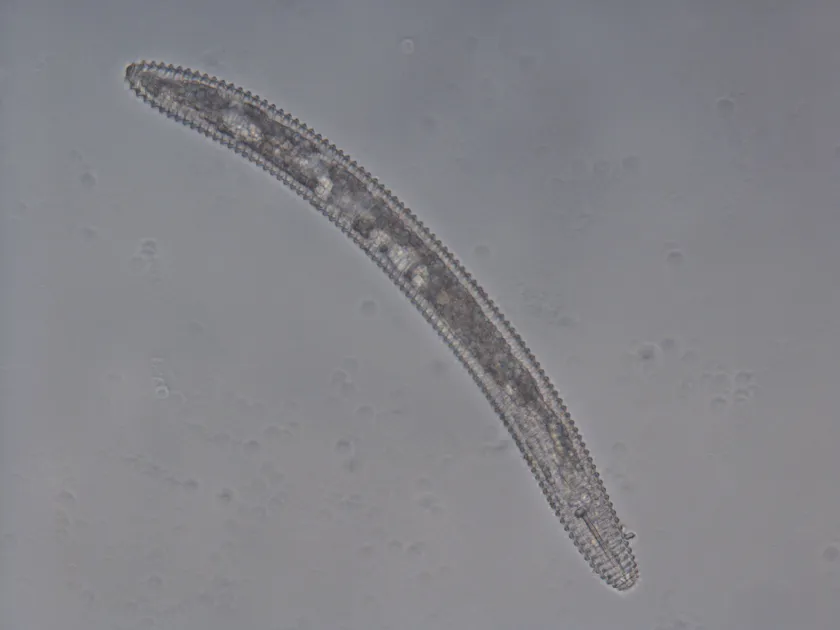
The defining characteristic of these nematodes is their prominent, heavy cuticular annulations (rings), which give them a distinct appearance under a microscope. This morphological feature is why they are classified as ring nematodes.
These parasites feed as ectoparasites by inserting their long, needle-like stylets into the root cells. They inject specialized enzymes to soften the tissue and extract plant fluids, causing significant physiological stress to the host.
Criconema species have a broad host range, impacting various crops and ornamentals. Notable hosts include peppers, passion flowers, geraniums, scented-leaf pelargoniums, ivy-leaf pelargoniums, and African violets (Saintpaulia).
Their life cycle is closely linked to the root health of the host plant. They reproduce in the rhizosphere, often forming dense colonies that actively suppress root development and nutrient uptake.
Conditions for development
Ring nematodes thrive in moist, loose, and warm soil environments. The presence of adequate organic matter in the substrate often supports higher population densities of these parasites.
In greenhouses and indoor potting conditions, the stable environment allows for year-round reproduction. Once a pot is contaminated, the nematode population can persist for a long time, leading to chronic plant decline.
Dissemination primarily occurs through contaminated soil, unsterilized pots, or infected nursery stock. Water from surface reservoirs used for irrigation can also serve as a vector for nematode larvae.
Poor soil drainage and high acidity can exacerbate the damage, as these conditions stress the root system further. Nematodes exploit this physiological weakness to increase their feeding activity.
Ring nematodes are relatively hardy; their eggs can survive in the soil for extended periods even in the absence of a host plant, making them difficult to eradicate once a site is infested.
Why it matters
The primary economic harm is the loss of productivity in vegetable crops like peppers and the loss of commercial value in ornamentals. Infested crops yield significantly less, with reduced fruit or flower size.
Nematode feeding creates physical wounds on the roots, which act as entry points for secondary bacterial and fungal pathogens. This often leads to complex root rot issues that are much harder to treat.
Infested plants become increasingly susceptible to secondary stressors, including temperature fluctuations and poor light conditions, eventually leading to the death of the plant if not addressed.
For collectors of indoor plants like Saintpaulia, an infestation can devastate an entire collection. The loss is not only financial but also involves the effort required to clean and disinfect the growing space.
The persistence of the pest makes long-term management costly, as it often requires the complete removal of soil, thorough disinfection of tools, and the discarding of infected plant material.
Protection
The most effective strategy is a strict exclusion policy. Always inspect new plants for signs of distress and quarantine them before introducing them into your main growing area.
Use only pasteurized or commercially sterilized potting media. If growing in open soil, solarization or chemical soil fumigation before planting can significantly reduce nematode populations.
Chemical control involves the use of specialized nematicides. For potted plants, application of granular or liquid soil drenches may be necessary, strictly following the manufacturer’s instructions regarding dosage.
Good sanitation practices, such as washing pots and tools with disinfecting solutions and avoiding the use of pond water, are essential for preventing the spread of nematodes.
Encouraging vigorous root growth through balanced fertilization and proper moisture management can help plants better tolerate the presence of low levels of nematodes, though this is not a substitute for active control.
Pathogens and affected parts
Affects crops · 6
Discussion
No discussions yet — be the first.