
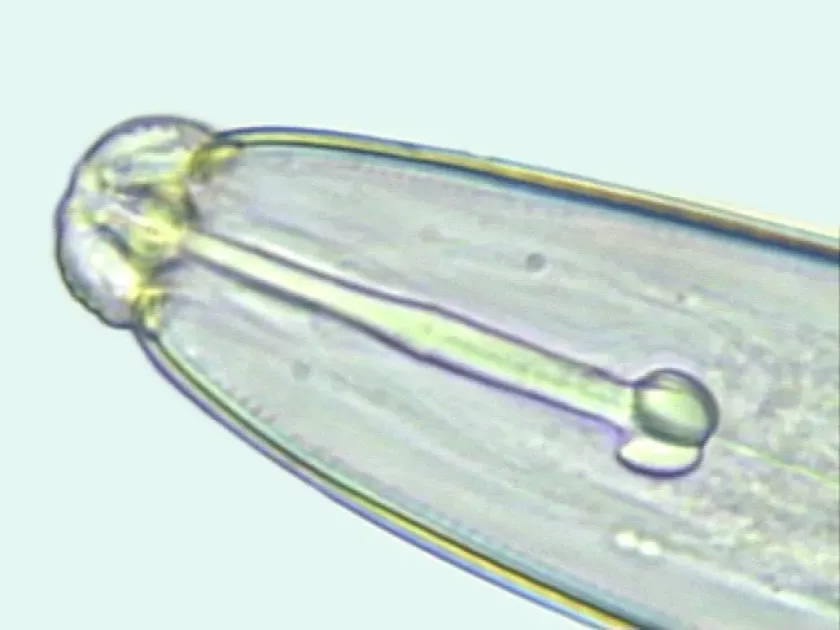
Description
Symptoms
Symptoms of an infestation are often observed in the field as patchy growth, where affected areas show significantly stunted plants and chlorotic foliage.
A detailed examination of the root system reveals characteristic symptoms such as root tip swelling, terminal galls, and a stunted, stubby appearance of the root apex.
Lesions often form at the feeding sites, which can lead to necrotic patches, making the root system highly susceptible to colonization by opportunistic bacteria and fungi.
In leafy crops like lettuce or mint, the lack of a functional root system prevents efficient water and nutrient uptake, leading to visible wilting during hot weather.
Severe infestations cause a distorted and poorly developed root architecture, which ultimately results in diminished biomass and lower yields for the affected crops.
Pathogen
Longidorus is a genus of ectoparasitic nematodes that act as serious plant pathogens. These soil-borne worms are commonly referred to as needle nematodes due to their long, slender body structure.
The primary pathogenic action involves using a long, needle-like stylet to pierce root tissues and feed on the nutrient-rich cytoplasm of root cells.
Beyond direct mechanical damage, Longidorus species are significant vectors of several plant viruses, including various nepoviruses that cause ringspot diseases.
The pathogen affects a diverse range of crops, including industrial hemp, watermelons, lettuce, and multiple species of mint such as field mint, peppermint, and spearmint.
These nematodes exhibit a slow life cycle and limited mobility, yet they can survive for extended periods in soil by feeding on the roots of various host plants and weeds.
Conditions for development
Longidorus nematodes thrive in light-textured, sandy, or silty soils, which provide the optimal environment for their movement toward plant roots.
Soil moisture levels are critical; the nematodes require sufficient moisture for survival but are sensitive to extreme conditions, such as prolonged waterlogging or excessive drought.
Their spread across a field is relatively slow and usually occurs via the movement of infested soil on farm machinery, tools, or contaminated nursery stock.
Temperature fluctuations in the soil affect the nematode's activity, with moderate spring and autumn temperatures being most conducive to root feeding and population growth.
Presence of host weeds provides a continuous source of nutrition, allowing the nematode population to persist even when the primary crop is not being grown.
Why it matters
The economic harm caused by Longidorus is twofold: direct loss of yield due to stunted root growth and reduced quality of harvested produce.
The viral diseases transmitted by these nematodes can render entire harvests unsellable, especially in crops where aesthetic quality is paramount, such as salad greens.
By compromising the plant's root system, these pests also reduce the plant's ability to withstand environmental stress, leading to higher mortality rates.
The long-term impact on soil health often makes it impossible to achieve profitable yields of sensitive crops without extensive intervention.
Managing an established population of Longidorus is complex and costly, often requiring changes in crop rotation or specialized soil treatments.
Protection
Effective prevention centers on strict sanitation protocols, ensuring that only nematode-free planting material is introduced to the farm.
Crop rotation using non-host species is a primary strategy for reducing nematode populations in the soil over time.
Soil fumigation remains the most potent chemical control method, although it is typically reserved for high-value agricultural systems due to its environmental impact.
Improving soil structure and consistent weed management are essential cultural practices that help minimize the favorable conditions required by the nematodes.
Emerging biological controls, such as the application of beneficial microbes and specific fungal antagonists, show promise in suppressing nematode numbers in sustainable farming.
Pathogens and affected parts
Affects crops · 6
Discussion
No discussions yet — be the first.