
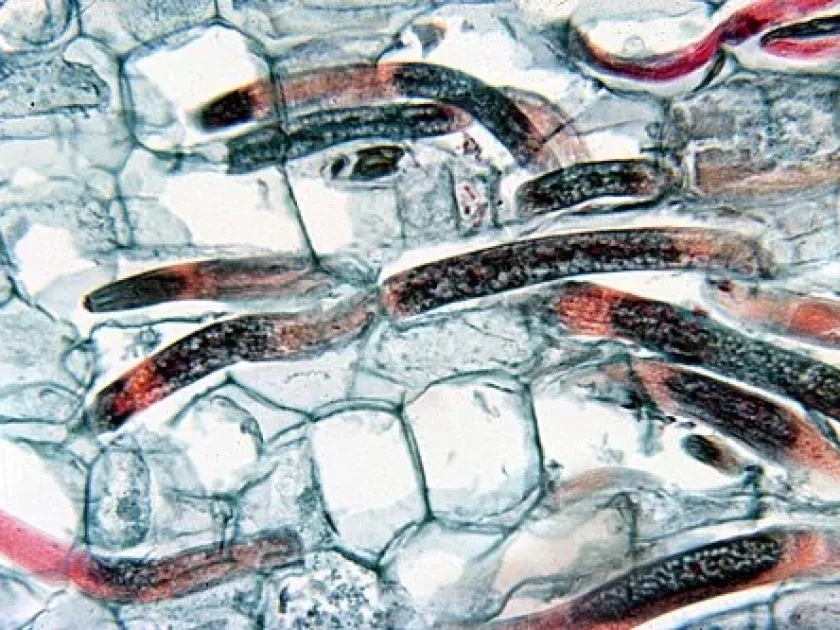
Description
Symptoms
Infected plants exhibit symptoms of stunted growth, leaf chlorosis, and general loss of vitality, which are often mistaken for nutrient deficiencies or water stress.
Examination of the roots reveals characteristic necrotic lesions, which appear as reddish-brown to black patches, indicating the internal destruction caused by the nematodes.
As the infection progresses, the root system becomes heavily decayed, leading to significant dieback of secondary roots and loss of fine root hairs.
Severely infested plants may be easily pulled from the soil, as the primary root system is often brittle and largely dysfunctional due to advanced necrosis.
In crops like watermelons, the stress caused by root destruction leads to smaller fruit sizes, poor fruit set, and significant reduction in overall marketability.
Pathogen
The disease is caused by plant-parasitic nematodes of the genus Radopholus. The most critical and widespread species is Radopholus similis, commonly known as the burrowing nematode.
These are endoparasitic nematodes that penetrate the roots, corms, and tubers of various plant species, feeding on the intracellular contents and destroying the cortex tissue.
The lifecycle of the nematode, including egg, larval, and adult stages, occurs within the host tissue, allowing the parasite to thrive while protected from external factors.
Once the host tissue is destroyed, nematodes emerge and migrate through the soil in search of new, healthy root systems to continue their reproductive cycle.
This genus is classified as a significant quarantine pest worldwide due to its ability to decimate crop yields and spread rapidly through agricultural operations.
Conditions for development
The development of Radopholus is favored by warm tropical or subtropical conditions and high soil moisture, which facilitates the movement of nematodes between roots.
The primary vector for the dissemination of this pathogen is the movement of infected plant propagation material, including nursery stock, rhizomes, and cuttings.
Soil and irrigation water contaminated with nematode eggs or larvae serve as efficient transport mechanisms, spreading the pest across large agricultural areas.
Farm equipment, containers, and workers' footwear can physically carry infested soil from one field to another, creating new foci of infection.
Weeds and secondary hosts in the soil allow the nematode population to persist during fallow periods, making total eradication extremely difficult.
Why it matters
Radopholus infection causes severe economic losses by reducing crop yield, increasing the cost of chemical treatments, and necessitating strict quarantine protocols.
Root destruction leaves the plant susceptible to opportunistic fungal and bacterial pathogens, which further accelerate the plant's decline and death.
Infested land may become unfit for the cultivation of susceptible host crops for many years unless intensive soil sterilization methods are applied.
The disease negatively impacts the aesthetic and biological quality of ornamental plants, while also degrading the quality and flavor profile of food crops.
In nursery settings, a Radopholus infestation can result in total loss of inventory, representing a major financial hit to commercial agricultural operations.
Protection
The most effective strategy involves rigorous phytosanitary measures, including the use of only certified, nematode-free propagation material for planting.
Field-level management requires long-term crop rotation with non-host species to naturally decrease the nematode population in the soil profile.
Thermal treatment (using hot water or steam) of equipment and soil is a highly effective way to eliminate the parasite in controlled greenhouse or nursery environments.
The application of specific nematicides, when permitted, helps manage the population density, although it rarely achieves total eradication of the pest.
Strict hygiene protocols for tools and machinery, combined with the quarantine of suspicious plots, are essential to prevent the spread of the pathogen.
Pathogens and affected parts
Affects crops · 1
Discussion
No discussions yet — be the first.