
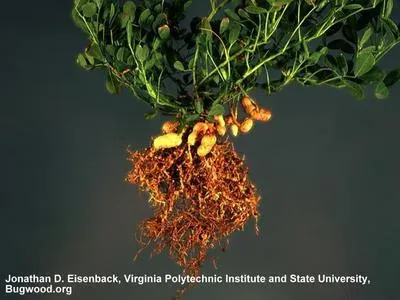
Description
Symptoms
The initial symptoms are characterized by stunted growth and lack of vigor in the peanut canopy. Infested plants typically appear shorter and less developed compared to healthy specimens in the same field.
Root system analysis often reveals severe damage, including lesions, browning, and necrosis. In some instances, galls or deformed root structures may develop as a stress response to the infestation.
Above-ground, plants exhibit yellowing of the leaves, starting from the lower foliage. During peak temperature hours, the plants show wilting symptoms despite adequate soil moisture, indicating an impaired root system.
Yield components are severely affected. The production of peanut pods is reduced, and the pods themselves are often underdeveloped, misshapen, or show signs of shell lesions.
Because these symptoms are non-specific and can be mistaken for nutrient deficiency or water stress, accurate identification requires laboratory diagnosis involving microscopic examination of soil and root samples.
Pathogen
The peanut stem nematode is caused by phytoparasitic nematodes of the genus Tylenchorhynchus. These microscopic worms act as ectoparasites, inhabiting the soil and feeding on the root systems of peanut plants.
These nematodes use their specialized mouthparts to pierce root tissues. By feeding on the cell contents, they inflict mechanical damage and inject enzymes that weaken the plant's structural integrity.
The biological cycle of these nematodes is entirely soil-bound. They progress through several larval stages before reaching sexual maturity, with reproduction rates highly dependent on ambient soil temperature and moisture levels.
Tylenchorhynchus species are known for their resilience. They can persist in the soil for extended periods even in the absence of a primary host by feeding on weed roots or residing in a quiescent state.
Dissemination occurs primarily through the movement of contaminated soil. Farm machinery, irrigation water, and infected transplant material are the most common vectors spreading the nematode across fields.
Conditions for development
Peanut stem nematodes thrive in light-textured soils, particularly sandy and sandy-loam types, which allow for easier movement of the nematodes within the thin films of water surrounding soil particles.
Warm soil temperatures (optimally between 25°C and 30°C) and moderate humidity levels create the ideal environment for the rapid reproduction and increased feeding activity of the nematode population.
Poor crop rotation practices are the primary driver of nematode buildup. Continuous monocropping of peanuts in the same field allows the nematode population to reach levels that cause economic damage.
The presence of susceptible weed hosts within the field creates a reservoir for the nematodes, allowing the population to survive and remain active even during fallow periods.
Inadequate field sanitation, such as failing to clean equipment after working on infested patches, leads to the rapid spread of the nematode within and between different production areas.
Why it matters
The primary harm is the continuous depletion of the host plant's energy resources. As nematodes feed on the roots, the plant loses its capacity to uptake essential water and nutrients effectively.
Infected crops show decreased tolerance to environmental stressors, such as heat and drought, leading to higher rates of plant mortality and thinning of the stand.
Nematode feeding creates entry points for secondary pathogens. Opportunistic soil-borne fungi and bacteria easily infect the weakened roots, leading to more complex root rot diseases.
Economic damage is substantial, with yield losses often ranging from 30% to 50% in heavily infested fields. Quality of the produce is also degraded, resulting in lower market prices.
Post-harvest losses are also a concern, as pods damaged by nematodes are more susceptible to mold infections during storage, potentially affecting the entire batch.
Protection
Implementing a strict crop rotation schedule is the cornerstone of nematode management. Rotating peanuts with non-host crops, such as corn or certain grasses, significantly reduces nematode density.
Strict phytosanitary practices are essential. This includes the use of certified, clean seeds and the thorough cleaning of all agricultural machinery moving between fields to prevent cross-contamination.
Cultural practices like deep plowing and vigorous weed control help reduce nematode populations in the upper soil layers by eliminating their alternate food sources.
In high-pressure situations, the application of chemical nematicides before or during planting may be necessary to suppress the nematode population below the economic threshold level.
Future-oriented management focuses on breeding and utilizing nematode-resistant or tolerant peanut varieties, which remains the most sustainable approach to long-term control.
Pathogens and affected parts
Affects crops · 1
Discussion
No discussions yet — be the first.